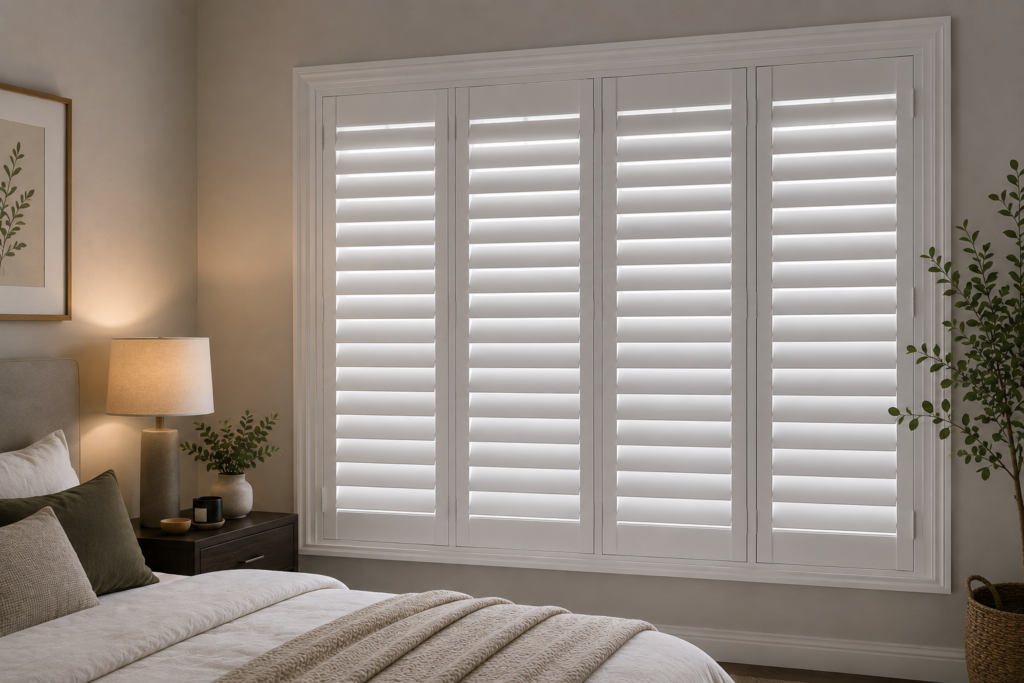
Privacy is one of the most consistently cited reasons Yorkshire homeowners choose plantation shutters over every other window covering and for good reason. Unlike roller blinds that force a binary choice between light and visibility, or curtains that sacrifice one for the other without nuance, plantation shutters give you genuine, adjustable, day-and-night control over who can see into your home and from what angle. This guide explains exactly how they achieve that, which styles work best for different privacy challenges, and where they compare to the alternatives.
The Privacy Problem Most Window Coverings Cannot Solve
Privacy in UK homes is not a niche concern. Planning policy guidance published by the Planning Portal acknowledges that except in the most isolated rural locations, few UK households can claim not to be overlooked to some degree making protection of residential privacy a mainstream concern rather than an edge case.
For Sheffield, Rotherham, Barnsley, and Doncaster specifically, the housing stock compounds this challenge. Victorian and Edwardian terraced streets were built before modern privacy standards existed, with front rooms sitting just metres from the pavement and bay windows that project directly toward passing pedestrians. The UK planning system’s approach to overlooking recognises that in close-knit urban settings, householders typically have significantly lower levels of privacy than those in more spacious suburbs and that front-facing windows are, in planning terms, already considered less private than their rear-facing equivalents by default.
The result is a structural privacy problem that neither net curtains nor roller blinds solve particularly well. Net curtains block the view during daylight but look dated and cannot be adjusted. Roller blinds are either fully up or fully down. Curtains, drawn completely, solve privacy at the cost of all natural light.
Plantation shutters address this differently and that difference is worth understanding properly.
How Plantation Shutters Control Privacy
The privacy mechanism of a plantation shutter comes from its louvres: horizontal slats that can be adjusted to any angle from fully open to fully closed. That adjustability is what makes shutters genuinely superior to the alternatives for privacy rather than just marginally better.
The Louvre Angle Principle
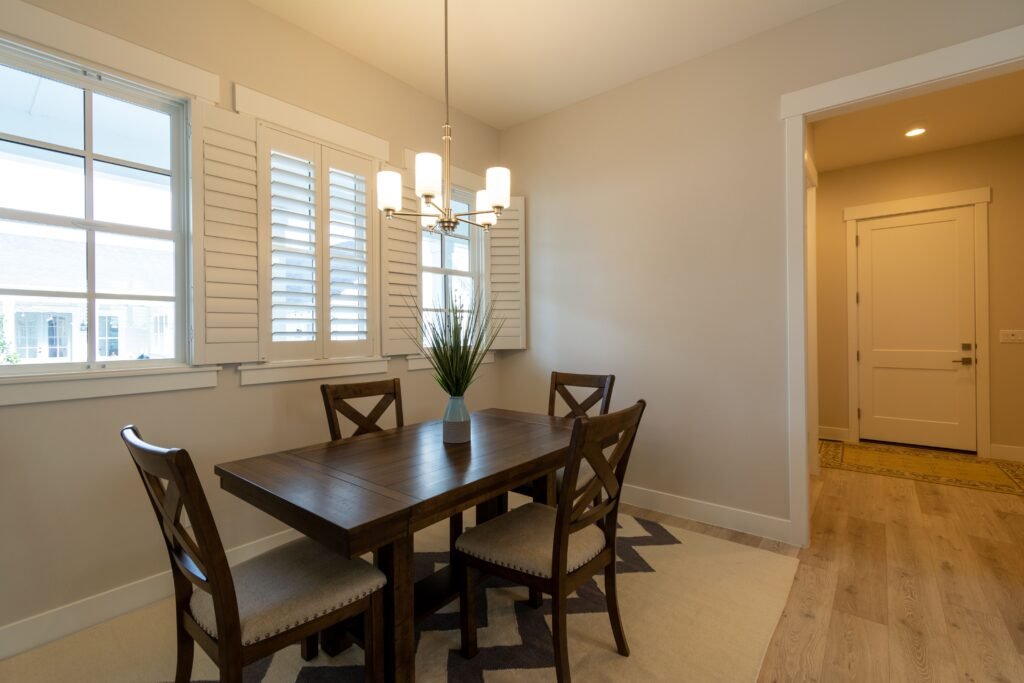
When louvres are angled upward, anyone standing at street level looking toward your window sees only the underside of each slat their sightline is interrupted before it reaches the room interior. Light still enters the room from above the slat surface, bouncing off ceilings and walls to create a naturally lit space that from outside appears screened. This is the fundamental insight behind why shutters outperform blinds for daytime privacy: they redirect the sightline rather than simply blocking it.
The angle required to achieve effective privacy varies depending on the height of the window relative to street level, the distance between your window and the road or neighbouring property, and the size of the louvres themselves. Larger louvres 76mm or 89mm wide provide a broader surface area per slat, which means fewer gaps between slats at a given angle and stronger directional privacy control. Smaller 63mm louvres are closer together and offer a more traditional appearance, but provide marginally less flexible privacy adjustment.
Daytime Privacy Without Sacrificing Light
A well-angled set of plantation shutters allows a genuinely useful amount of natural light into a room while preventing visibility from outside something no roller blind or curtain can achieve simultaneously. Angling louvres at approximately 45 degrees upward typically strikes the most practical balance: enough light enters from the upper portion of each slat’s surface to keep the room comfortable, while the downward sightline from any external viewer is blocked before it penetrates the room interior.
This is particularly practical for Sheffield’s terraced front rooms, where the pavement is often just a few feet from the window. A café style shutter covering only the lower half of the window can solve this specific problem precisely, leaving the upper half entirely open for maximum light and sky view while eliminating the street-level sightline that matters most.
Night-Time Privacy: Where Shutters Genuinely Stand Apart
This is where the advantage over curtains and roller blinds is most pronounced, and it is the point most relevant to Yorkshire homeowners with street-facing rooms that are regularly lit in the evening.
When interior lights are on at night and the window is dressed with a light-filtering roller blind or sheer curtain, the physics of light transmission reverses. During the day, the brighter exterior makes the interior relatively dark and hard to see into. At night, the brighter interior turns the window into a near-perfect view of everything behind it. A roller blind that provided daytime privacy provides almost none in the evening.
Plantation shutters with louvres correctly angled do not have this problem. The louvre angle creates a physical interruption of the sightline regardless of which side is brighter the slat surface blocks the external view at night just as effectively as during the day. As Shuttercraft, one of the UK’s largest shutter specialists, confirms in their published guidance, with window shutters you can adjust the louvres so you cannot be seen from a particular angle meaning you can obscure the view from a busy street without shutting the light out altogether.
Fully closed louvres at night provide complete privacy with no trade-off. Partially angled louvres provide a combination of privacy and ambient light that no other standard window covering can match.
Privacy by Shutter Style: Which Works Best for Your Room
Different shutter styles serve different privacy requirements, and matching the right style to the specific challenge in each room makes a significant practical difference.
Full Height Shutters
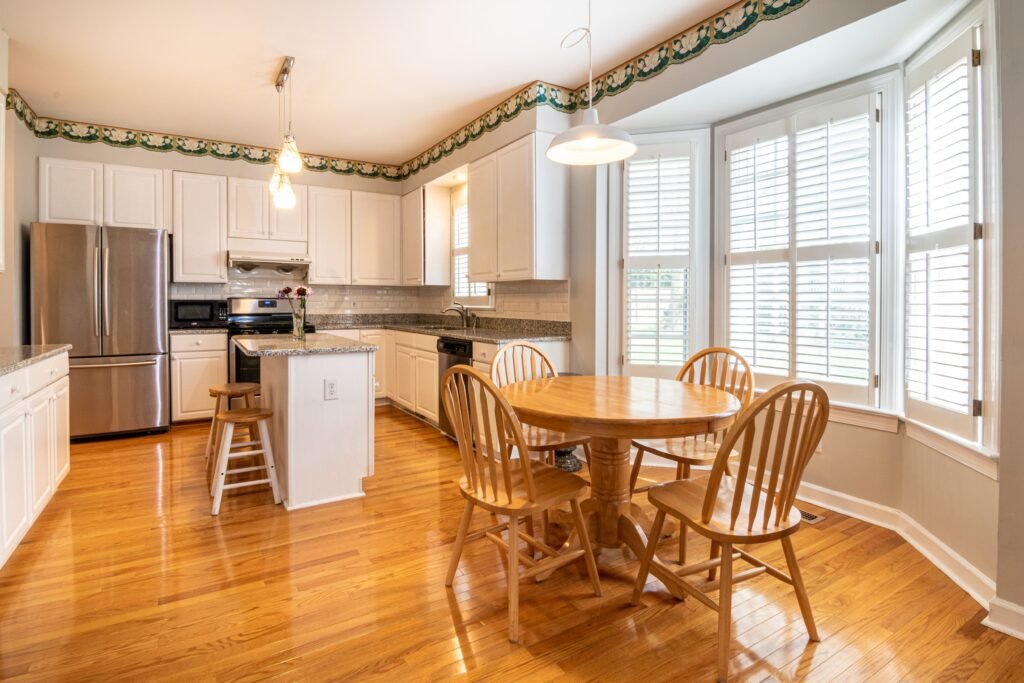
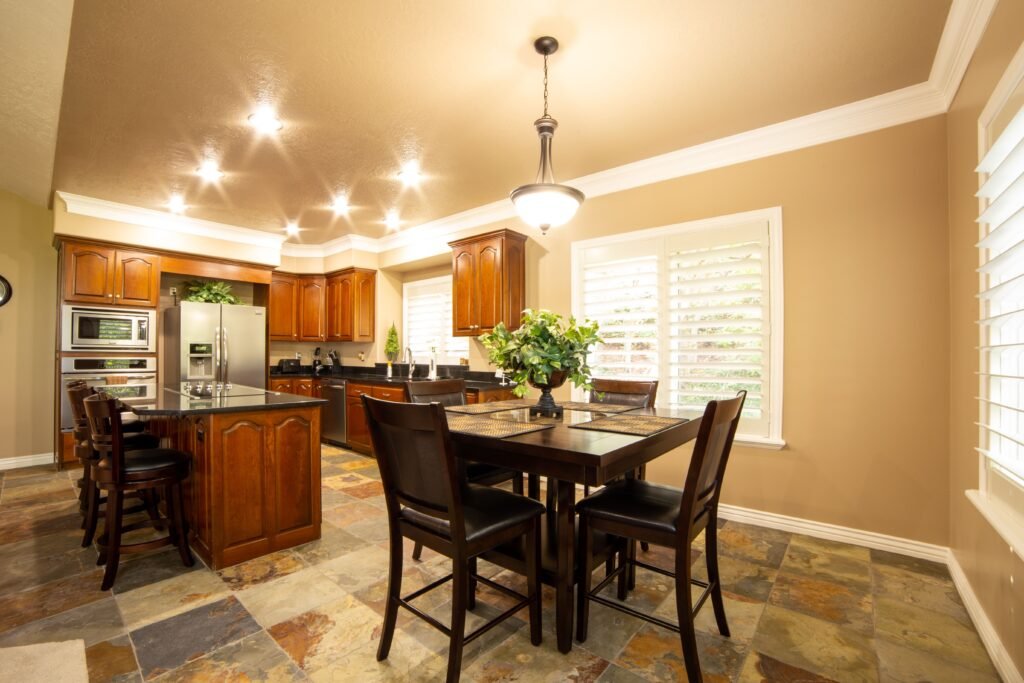
The most common style and the most comprehensive privacy solution. A single set of full height panels covers the entire window from top to bottom, giving you complete control over every part of the opening. When panels are closed and louvres angled, full height shutters provide privacy while still admitting light. When panels are folded back entirely, the window is fully open. For living rooms and bedrooms where the whole window is the privacy concern, full height is the right choice.
Café Style Shutters
The most practical style specifically for street-facing privacy in terraced housing. The lower half of the window is shuttered addressing the street-level sightline that matters most while the upper half remains permanently open for light and sky view. Café style is ideal for front rooms in the terraced streets that dominate Sheffield, Barnsley, and Rotherham’s housing stock, where the primary privacy concern is pedestrian-level visibility rather than sightlines from above.
Tier-on-Tier Shutters
Two sets of independent panels one for the upper half of the window and one for the lower each adjustable separately. This gives the flexibility of café style (lower closed, upper open) while also allowing the upper section to be closed independently when needed. For rooms where privacy requirements change throughout the day a bedroom that needs full privacy at night and maximum daylight in the morning tier-on-tier is the most versatile option available.
Tracked Shutters
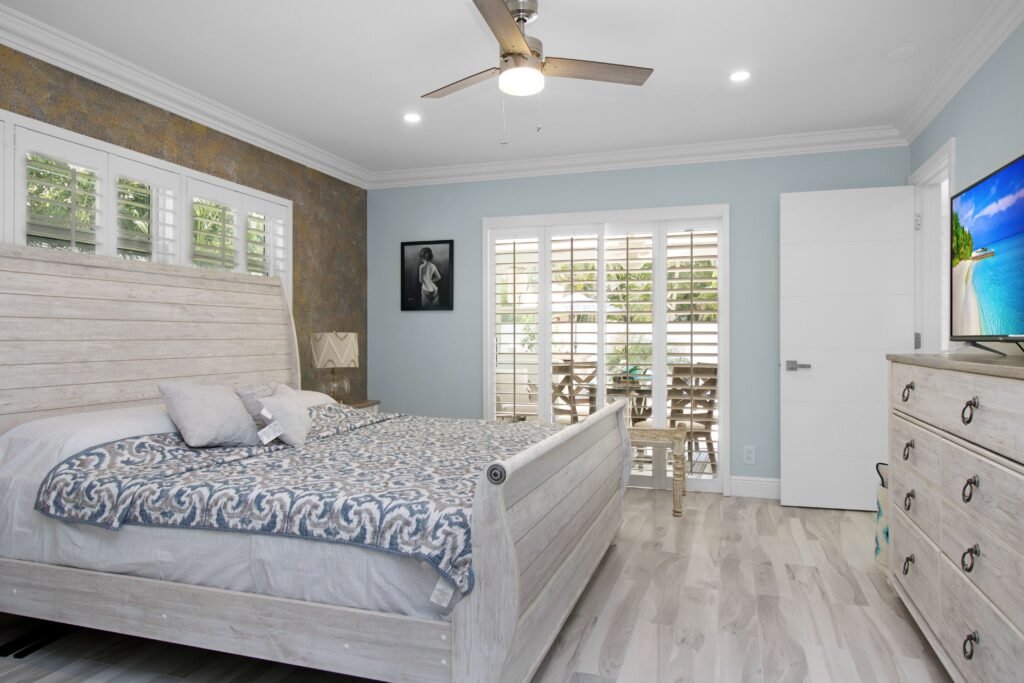
For wide openings such as patio and bi-fold doors where privacy is a concern alongside access, tracked shutters slide along a rail rather than hinging open. They cover the full width of the opening and provide the same louvre-controlled privacy as any other shutter style, while allowing the panels to stack neatly to one side when full access is needed.
Shaped and Arched Shutters
For windows where the shape itself creates a privacy challenge circular, arched, or triangular openings that are difficult to dress with any standard window covering bespoke shaped shutters provide a fitted solution that follows the exact profile of the opening. The Lafayette Shutters team can advise on shaped options based on your specific window measurements.
Privacy Comparison: Shutters vs the Alternatives
| Window Covering | Daytime Privacy | Night-Time Privacy | Light While Private | Adjustability |
| Plantation shutters (louvres angled) | Excellent | Excellent | Good to excellent | Full infinite louvre positions |
| Roller blind (light-filtering) | Moderate | Poor reverses at night | Limited | None up or down only |
| Roller blind (blackout) | Good | Good | None when down | None up or down only |
| Net curtains | Moderate | Poor reverses at night | Good | None |
| Heavy curtains | Good (when drawn) | Good (when drawn) | None when drawn | None open or closed |
| Venetian blinds | Moderate | Moderate | Limited | Partial slat angle only |
The column that matters most for most homeowners is night-time privacy. It is specifically in the evening when interior lights are on, televisions are visible, and family activity is most clearly illuminated from outside that roller blinds and net curtains fail most visibly. This is the scenario that drives most dissatisfaction with standard window coverings in terraced housing and the primary reason so many Yorkshire homeowners switch to shutters once they experience the difference.
Privacy and Security: A Connected Benefit
The privacy benefit of plantation shutters extends beyond comfort into security, and it is worth understanding why.
UK police crime prevention guidance consistently highlights the opportunistic nature of most residential burglaries the majority of break-ins are not planned but triggered by visible opportunity, most commonly when valuables or an apparently easy entry point are visible through a window. As Shuttercraft notes in their published homeowner guidance, interior shutters give the impression that windows would be more difficult to get through, acting as a visual deterrent, and they can be angled so that would-be opportunists cannot easily see into the home.
This is not simply a marketing claim. An additional solid layer inside the window glass even purely visually reduces the appeal of a window as an entry point to anyone conducting a quick assessment from the street. Combined with the privacy benefit of preventing valuables from being visible, plantation shutters contribute in a practical way to home security as well as comfort.
Which Rooms Benefit Most From Plantation Shutters for Privacy
Street-Facing Living Rooms
Front rooms in Yorkshire’s terraced streets are the single most common context where plantation shutters are chosen specifically for privacy. The combination of pavement proximity, large windows, and evening lighting creates the exact scenario where shutters outperform every other covering. Café style addresses the primary sightline. Full height addresses the whole window. Either is significantly more effective than the alternatives.
Ground Floor Bedrooms
Ground floor bedrooms increasingly common in modern accessible housing and period conversions face significant privacy challenges from any window. Full height shutters or tier-on-tier provide the flexibility to have complete privacy when the room is in use and easy light access in the morning, without requiring full blackout or curtain-drawing.
Bathrooms
Bathroom privacy is non-negotiable, and the material matters as much as the style. UPVC plantation shutters are the right choice for bathrooms fully waterproof, easy to clean, and providing complete privacy with louvres angled to admit diffused light while eliminating any external view. Unlike frosted glass, which provides privacy only through obscuring, shutters allow you to open the louvres fully for ventilation and close them when the room is in use.
Home Offices
Home offices increasingly contain screens displaying sensitive work, personal files visible on desks, and equipment that represents both a data security and physical theft risk. Plantation shutters allow the louvres to be angled specifically to eliminate the screen-visibility angle from outside a level of directional privacy control that no other standard window covering provides.
Bay Windows
Bay-fronted properties, common across Sheffield’s Victorian terraces, present a particular challenge: the projecting bay means the window faces multiple directions simultaneously, creating overlapping sightlines from different street positions. A professionally fitted set of bay window plantation shutters addresses every panel of the bay independently, allowing each section to be angled to the direction of the relevant external sightline.
Maximising Privacy From Your Shutters: Practical Guidance
Once your shutters are fitted, a few habits and settings make a significant difference to how effectively they manage privacy throughout the day.
Angle louvres upward for daytime privacy. Tilting the louvres so they face upward directs the incoming sightline toward the underside of each slat rather than through the gaps into the room. This delivers the best combination of daytime light and external privacy. Tilting downward admits more light but reduces privacy a useful setting for rooms with no street-facing visibility concern.
Close louvres fully before switching on lights in the evening. The most important habit for night-time privacy. Making this part of the evening routine closing louvres before lamps or overhead lights go on eliminates the brief window where the room is illuminated but the covering is not yet fully adjusted.
Use tier-on-tier lower panels during the day, upper panels in the evening. For rooms with tier-on-tier shutters, keeping the lower panels closed and angled during the day addresses street-level sightlines while the upper section remains open for daylight. Closing both independently in the evening provides full coverage without the need to fold panels back and reset them.
Adjust louvre angle by room orientation. A south-facing room needs different louvre positioning to a north-facing one. In south-facing rooms, angling louvres upward reflects incoming sunlight off the ceiling rather than creating glare combining privacy with glare reduction. In north-facing rooms, louvres can usually be left more open since there is less direct sun to contend with.
Lafayette Shutters: Privacy Solutions Across Yorkshire and Derbyshire
Lafayette Shutters supplies and installs bespoke plantation shutters across Sheffield, Rotherham, Barnsley, Doncaster, Huddersfield, Chesterfield, and the wider Yorkshire and Derbyshire region. Every fitted order starts with a free home survey, where a specialist visits your property, assesses the specific sightlines and privacy challenges in each room, and recommends the most appropriate shutter style, louvre size, and configuration to address them.
Materials available include Paulownia hardwood with ABS coating for living rooms, bedrooms, and hallways, UPVC for bathrooms and other moisture-prone rooms, and basswood for larger openings. All products are made to measure to your exact window dimensions the single most important factor in ensuring there are no gaps around the frame that compromise privacy.
For homeowners outside the installation area, supply-only orders are available nationwide across Great Britain. Not sure which style suits which room? The Lafayette FAQ covers style and material suitability in detail.
Frequently Asked Questions About Plantation Shutters and Privacy
Are plantation shutters good for privacy?
Yes plantation shutters are widely regarded as one of the best window coverings available for privacy in UK homes. Their adjustable louvres allow you to control the external sightline with precision, maintaining privacy during the day without blocking light entirely, and continuing to provide effective privacy in the evening when interior lights are on something roller blinds and net curtains fail to achieve.
Do plantation shutters give privacy at night?
Yes, and this is the most significant advantage over roller blinds and light-filtering curtains. When louvres are angled correctly, the slat surface physically interrupts the external sightline regardless of which side is brighter. A fully closed set of plantation shutters provides complete privacy at any time of day or night. Partially angled louvres provide a combination of privacy and ambient light that no standard alternative can match after dark.
Which shutter style is best for privacy in a street-facing room?
Café style shutters are the most practical solution for street-facing rooms in terraced housing, as they address the pavement-level sightline that matters most while leaving the upper half of the window open for light and sky view. Full height shutters provide complete coverage and are the right choice when the entire window is a privacy concern. Tier-on-tier offers the most flexibility for rooms where requirements change throughout the day.
Can you see through plantation shutters from outside?
When louvres are angled correctly, it is not possible to see directly into the room from outside. The slat surface creates a physical barrier across the sightline, and the angle of the louvres determines from which direction any view is possible. Tilting louvres upward blocks the view from street level most effectively. Closing louvres fully eliminates all external visibility regardless of direction or lighting conditions.
Are plantation shutters better than blinds for privacy?
For day-and-night privacy combined with light control, plantation shutters are significantly more effective than roller blinds. Roller blinds operate on an all-or-nothing basis they are either up or down and light-filtering variants provide poor privacy at night when interior lights are on. Plantation shutters allow continuous, precise adjustment of privacy and light simultaneously, and they maintain privacy after dark without requiring the blind to be fully closed.
Do plantation shutters provide privacy in bathrooms?
Yes, and UPVC plantation shutters are specifically recommended for bathroom windows due to their full waterproofing. Louvres can be angled to admit diffused light while eliminating any external sightline, or fully closed for complete privacy when the room is in use. This provides more flexible privacy than frosted glass, which cannot be adjusted.
How do louvre sizes affect privacy?
Larger louvres 76mm or 89mm wide cover a greater surface area per slat, which means fewer individual gaps between slats at any given angle and stronger privacy control per degree of louvre opening. Smaller 63mm louvres have narrower gaps when open, producing a tighter, more traditional look, but require closing to a slightly greater angle to achieve the same level of privacy as wider louvres at a more open setting.
Ready to Solve the Privacy Problem in Your Yorkshire Home?
Lafayette Shutters installs made to measure plantation shutters across Sheffield, Rotherham, Barnsley, Doncaster, Huddersfield, Chesterfield, and across Yorkshire and Derbyshire. Every fitted order starts with a free home survey to assess your specific sightlines, recommend the right style and louvre size, and ensure precision fit the single most important factor in achieving consistent privacy with no gaps around the frame.
Call 0114 698 6245, email info@lafayette-shutters.co.uk, or use the online quote tool for an instant price estimate.