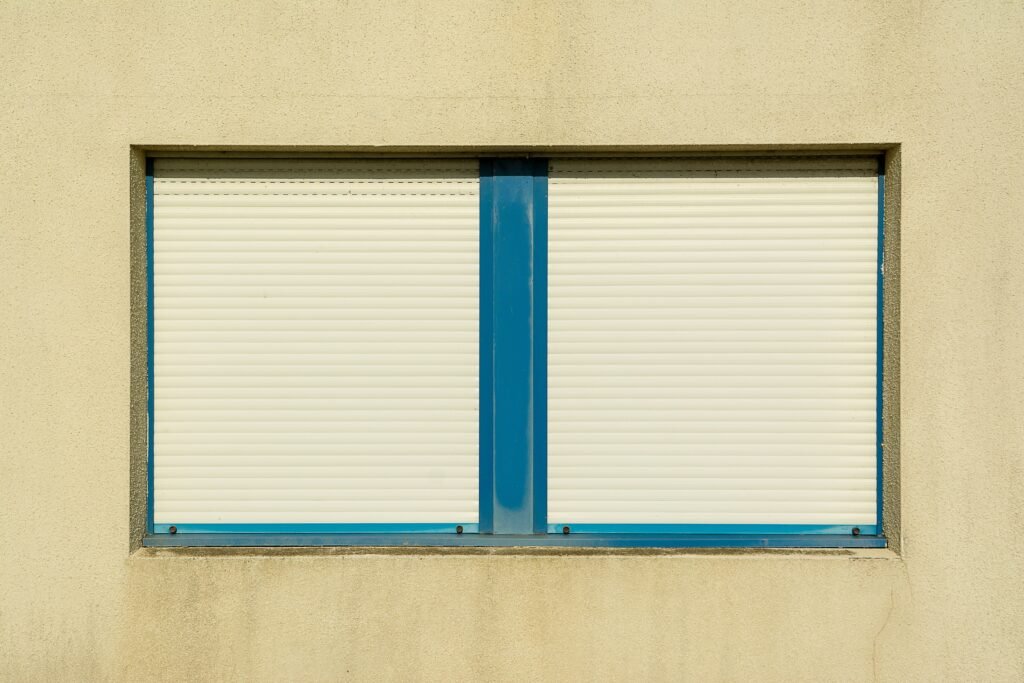
If you have ever sat near a window on a winter evening and felt the cold creeping in despite the heating being on, you already understand the problem that plantation shutters are particularly well placed to address. Draughts from windows are one of the most common comfort complaints in UK homes and one of the most underestimated contributors to heat loss and rising energy bills. This guide explains exactly how plantation shutters reduce draughts, what the independent research shows, how fit quality determines how much difference they actually make, and which homes benefit most.
The Scale of the Draught Problem in UK Homes
Before looking at how shutters help, it is worth understanding how significant window draughts actually are as a heat loss source.
Research from the Glass and Glazing Federation found that UK homes lose up to 24% of their total heat energy through windows making windows one of the single largest sources of thermal loss in the building envelope. The English Housing Survey 2024 to 2025, published by the Department for Energy Security and Net Zero, found that over 2.7 million households are still living in homes with critically low insulation levels, with more than 1.2 million of those in solid-walled properties where conventional cavity wall insulation is not possible.
For Yorkshire in particular, where the housing stock skews heavily toward Victorian and Edwardian stone terraces with solid walls, original timber window frames, and single or early double glazing, draughts are not a minor inconvenience they are a structural feature of the housing stock itself. Older buildings lose proportionately more heat than modern ones because successive Building Regulations have only required increasing levels of air tightness in homes built since the 1990s, which means any home built before that era is operating below the current standard by definition.
People are also significantly more sensitive to air movement than most homeowners realise. Even a draught at the same temperature as the rest of a room creates a cooling effect on the skin that makes the room feel colder than the thermometer reads. When that draught carries genuinely cold outside air as most window draughts do the impact on comfort is immediate and sustained.
How Plantation Shutters Physically Reduce Draughts
The mechanism by which plantation shutters reduce draughts is straightforward, and it works at two levels simultaneously.
The Physical Barrier
Plantation shutters are rigid, solid window coverings fitted directly to the window reveal or frame. Unlike curtains, which hang loosely and allow air to circulate freely behind the fabric, or roller blinds, which sit close to the glass but leave open gaps at the sides, a properly fitted plantation shutter forms a physical barrier that interrupts the movement of cold air across the window surface.
When the louvres are fully closed, the shutter panels create a solid wall across the entire window opening. Cold air drawn across the surface of the glass by convection the process where warm indoor air rises, hits cold glass, cools, and falls is interrupted at the shutter panel rather than flowing freely into the room. The result is a measurable reduction in the draught effect felt by anyone sitting near the window.
The Still Air Pocket
The second and arguably more significant mechanism is the air pocket formed between the shutter and the glass. When a shutter sits within the window reveal with a close, consistent fit, the space between the back of the shutter panel and the face of the glass becomes a small chamber of trapped air. Because this air cannot circulate freely it is bounded by the glass on one side and the shutter panel on the other it becomes thermally still.
Still air is one of the most effective natural insulators available. This is the same principle used in double glazing it is the trapped gas between the panes, not the glass itself, that provides most of the thermal performance. A plantation shutter creates an equivalent effect on a larger scale, adding a second still-air layer on top of whatever glazing is already present.
This combination physical draught interruption plus trapped still air is what gives plantation shutters their measurable thermal performance advantage over curtains and blinds.
What the Independent Research Shows
The most credible independent evidence on this comes from testing commissioned and funded by theBritish Blind and Shutter Association (BBSA) and carried out at the University of Salford’s Energy House Laboratory a full-scale terraced house built within an environmental chamber capable of replicating temperatures as low as -12°C.
The research confirmed that internally fitted plantation shutters can reduce heat loss through double-glazed windows by up to 28%. That figure specifically covers louvred plantation shutters rather than solid panel variants. Solid panel shutters more common on Georgian and period properties perform at the higher end of the range, since the absence of louvres removes any residual gaps in the panel surface when closed.
On single-glazed windows, the thermal benefit is larger still. Because the starting thermal performance of single glazing is considerably worse than double glazing, adding any well-fitted shutter delivers a proportionally greater improvement. The Energy Saving Trust consistently highlights window coverings as a practical, lower-cost alternative to full window replacement for homeowners who want to reduce heat loss through their existing glazing.
Across all window types, the independent evidence is consistent: plantation shutters reduce draughts and thermal loss meaningfully when correctly fitted, and they outperform both roller blinds and standard curtains in doing so.
Why Fit Is the Most Critical Variable
This point appears in every credible independent assessment of shutter thermal performance, and it deserves more emphasis than it typically receives in supplier content: the insulating and draught-reducing performance of a plantation shutter depends almost entirely on how well it fits the window opening.
A shutter with gaps at the sides, top, or bottom whether because of inaccurate measurement or an out-of-square window reveal allows cold air to bypass the panel entirely. The still-air pocket effect is broken, the physical draught barrier has holes in it, and the thermal performance drops sharply. A shutter that binds against its frame and cannot close fully is worse than no shutter at all in terms of draught control, since it sits at a permanent angle and creates a channel for air movement.
This is why professional measurement matters more for draught reduction than for almost any other shutter benefit. Yorkshire’s Victorian and Edwardian housing stock is particularly prone to out-of-square window openings, where a measurement taken at the top of the recess can differ from one taken at the bottom by several millimetres enough to compromise fit significantly if not accounted for in manufacturing.
Lafayette Shutters provides a free home survey for every fitted order, where a specialist measures each window at multiple points to ensure the manufactured shutter fits precisely within the reveal. This is not a formality it is the specific step that makes the draught-reduction benefit real rather than theoretical.
Which Homes Benefit Most From Shutters for Draught Reduction
Not every home benefits equally from plantation shutters as a draught-reduction measure. The benefit is most pronounced in specific circumstances, and understanding them helps you prioritise where shutters will make the greatest practical difference.
Victorian and Edwardian Terraces
Properties built before the 1930s which make up a disproportionately large share of the housing stock across Sheffield, Rotherham, Barnsley, and Doncaster typically have solid stone or brick walls without a cavity, original timber window frames that have moved and settled over decades, and glazing that predates modern energy-efficiency standards. These homes combine high window heat loss with limited practical insulation options for the walls and frames. Plantation shutters fitted to every window can make a significant, cumulative difference to the warmth and draught reduction of the whole house.
Rooms With North-Facing Windows
North-facing rooms receive no direct solar gain to offset heat loss through windows, meaning they can feel persistently cold in winter even when the heating is running. Plantation shutters with fully closed louvres on north-facing windows provide their greatest thermal return precisely in these rooms, since there is no trade-off between solar gain and draught reduction to manage.
Ground Floor Front Rooms in Terraced Housing
Street-facing ground floor rooms in Sheffield’s dense terraced streets sit closest to the source of cold draughts the window itself and often face prevailing wind with minimal external shelter. Full-height shutters on these windows provide both draught reduction and privacy, addressing two of the most common complaints about terraced front rooms simultaneously.
Rooms With Large or Bay Windows
Larger window openings lose more heat per square metre and allow more cold air to circulate against the glass surface. Bay windows common in Victorian terraces across Crookes, Nether Edge, and Hillsborough are especially prone to draught issues because the angled sections of the bay create multiple junction points where frames can flex and gaps can develop over time. A professionally fitted set of bay plantation shutters addresses every section of the bay precisely, rather than leaving the gaps that curtains and blinds inevitably leave at the corners.
Plantation Shutters vs Other Draught Reduction Options
Plantation shutters are one of several approaches to reducing window draughts, and it is worth being clear about where they sit relative to alternatives.
| Method | Draught Reduction | Upfront Cost | Disruption | Aesthetic Impact |
| Plantation shutters (well fitted) | High up to 28% heat loss reduction on double glazing | Moderate to high | Very low | Significant improvement |
| Double or triple glazing replacement | High up to 20% of total home heat loss | High | High | Moderate |
| Draught-proofing strips around frames | Moderate for gaps and edges | Low | Very low | Neutral |
| Heavy interlined curtains (sealed edges) | Moderate effective when sealed at sides | Moderate | Very low | Moderate |
| Standard roller blinds | Low gaps at sides reduce effectiveness | Low | Very low | Neutral |
Draught-proofing strips are often the first recommendation for window draughts because they are cheap and quick to install. They address the specific problem of gaps around the window frame itself, but they do not reduce convective heat loss across the glass surface in the way that a fitted shutter does. For homes where the primary issue is cold air flowing around an aged frame, draught strips and shutters are complementary rather than competing measures.
Where plantation shutters genuinely outperform every other option in this table is in addressing both draught reduction and broader thermal performance light control, privacy, aesthetic improvement, and long-term durability as a single investment, rather than requiring multiple separate measures to achieve the same result.
Getting the Most From Plantation Shutters for Draught Reduction
Once your shutters are fitted, a few simple habits significantly amplify their draught-reducing performance throughout winter.
Close louvres fully from dusk. The still-air pocket only works when the louvres are fully closed. Leaving them at a partial angle creates small gaps in the panel surface that allow air movement. The habit of closing shutters fully at the end of the afternoon before the outside temperature drops to its overnight low consistently makes a practical difference to room warmth.
Open shutters fully during daylight hours. Allowing solar gain through south-facing windows during the day is free heat. A shutter that is kept closed through a sunny winter afternoon prevents passive warming that reduces the burden on your boiler. Open fully during sun hours, then close again before dusk for maximum overall efficiency.
Check the fit annually. In Yorkshire’s older housing stock, timber frames and window reveals can shift slightly with seasonal temperature and humidity changes. If you notice any draught returning around the edge of a shutter panel that previously fitted well, contact your supplier. An early adjustment avoids the gap widening and is usually straightforward to resolve.
Combine with draught strips on the frame itself. For windows where the frame has genuine gaps independent of the shutter, combining a well-fitted shutter with self-adhesive foam or compression draught strips around the frame addresses both the convective loss across the glass and the gap loss around the edges, giving you the most comprehensive draught reduction available without replacing the window entirely.
Lafayette Shutters Across Yorkshire and Derbyshire
Lafayette Shutters supplies and installs bespoke plantation shutters across Sheffield, Rotherham, Barnsley, Doncaster, Huddersfield, Chesterfield, and the wider Yorkshire and Derbyshire region. Products include Paulownia hardwood with ABS coating the most thermally effective option for dry rooms UPVC for kitchens and bathrooms, and basswood for larger window applications.
Every fitted order begins with a free home survey where a specialist measures to precise tolerances, ensuring the still-air and draught-barrier benefits are fully realised in the finished installation. For those outside the installation area, supply-only orders are available nationwide across Great Britain, with full instructions included.
Not sure which style or material suits your windows best? The Lafayette FAQ covers material suitability, lead times, and warranty terms in full.
Frequently Asked Questions About Plantation Shutters and Draughts
Do plantation shutters stop draughts from windows?
Yes, in a meaningful and measurable way. Properly fitted plantation shutters interrupt the flow of cold air across the window surface and create a still-air pocket between the shutter panel and the glass when the louvres are closed. Independent research by the British Blind and Shutter Association, carried out at the University of Salford’s Energy House Laboratory, confirms that internally fitted plantation shutters reduce heat loss through double-glazed windows by up to 28%. That reduction in heat loss directly corresponds to a reduction in the draught effect felt near the window.
Are plantation shutters better than curtains for keeping out draughts?
Yes. Curtains provide some draught reduction, but because they hang loosely and leave gaps at the sides, top, and bottom, they allow warm air to convect freely behind the fabric. This convective movement carries heat from the room toward the cold glass, which is precisely what draught-reducing window coverings should prevent. A plantation shutter fitted precisely within the window reveal seals those gaps and creates a stable still-air pocket that standard curtains cannot match.
How much do plantation shutters reduce heat loss from windows?
The most reliable independent figure comes from University of Salford testing commissioned by the British Blind and Shutter Association: up to 28% heat loss reduction on double-glazed windows. On single-glazed windows still found in a proportion of Yorkshire’s older period properties the improvement is proportionally greater, since the starting thermal performance of single glazing is significantly worse. Solid panel shutters perform toward the higher end of the range; louvred shutters sit somewhat below that ceiling but still meaningfully above curtains and standard blinds.
Does the fit of plantation shutters affect how much they reduce draughts?
Fit is the single most important variable. A shutter that fits precisely within the window reveal traps still air and forms a consistent draught barrier. A shutter with gaps whether because of inaccurate measurement or an out-of-square window reveal allows cold air to bypass the panel, breaking both the still-air pocket and the physical draught barrier. Professional measurement is essential for draught reduction, particularly in Yorkshire’s older housing stock where window openings are frequently not perfectly square.
Are plantation shutters suitable for draughty Victorian homes in Sheffield?
They are particularly well suited to Victorian homes, which are the properties in Sheffield that typically experience the worst draught problems. Solid stone walls, original timber frames, and pre-modern glazing all contribute to the draught issues common in properties across Nether Edge, Crookes, Heeley, Walkley, and Hillsborough. Because plantation shutters are made to measure and fitted within the existing window reveal without any structural work, they are one of the few practical thermal upgrades available for period properties where double glazing replacement may be undesirable or restricted. You can get a free home survey to see exactly which shutter type would work best for your specific windows.
Can plantation shutters replace draught-proofing strips?
They are complementary rather than interchangeable. Draught-proofing strips address gaps in the window frame itself the physical openings where frames have shrunk or shifted. Plantation shutters address convective heat loss across the glass surface and through the window as a whole. For maximum draught reduction, using both together is more effective than either alone strips seal the frame gaps, shutters seal the opening and add the still-air layer.
Which plantation shutter material reduces draughts best?
Dense hardwood materials particularly Paulownia with ABS coating provide the most effective draught barrier due to the solid wood construction and the way the louvres form a consistent, tight panel when fully closed. UPVC shutters perform similarly for draught reduction and add the benefit of full waterproofing in damp rooms such as bathrooms. Basswood is a reliable third option for larger dry-room windows. In all cases, the precision of the fit matters more than the specific material a well-fitted UPVC shutter will outperform a poorly fitted hardwood one for draught reduction every time.
Ready to Stop the Draughts in Your Yorkshire Home?
Lafayette Shutters installs made to measure plantation shutters across Sheffield, Rotherham, Barnsley, Doncaster, Huddersfield, Chesterfield, and the wider Yorkshire and Derbyshire region. Every fitted order starts with a free home survey to ensure precision fit the single most important factor in how effectively your shutters reduce draughts.
Call 0114 698 6245, email info@lafayette-shutters.co.uk, or use the online quote tool for an instant estimate.