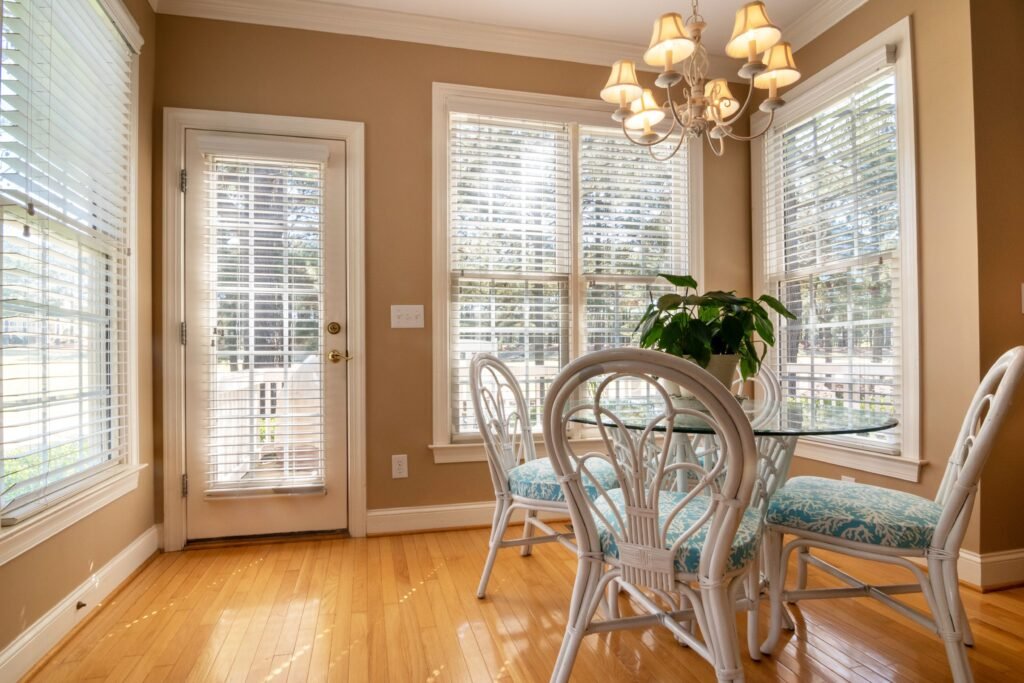
If you have stood in front of a window trying to decide between a roller blind and a set of plantation shutters, you are facing one of the most common window dressing decisions UK homeowners make. Both have genuine strengths. Neither is automatically “better” for every room or every budget. This guide compares them honestly across the factors that actually matter , cost, privacy, light control, durability, and energy efficiency , so you can decide with confidence rather than guesswork.
The Fundamental Difference
A roller blind is a single piece of fabric that rolls up and down on a tube fitted above the window. It is either open or closed, with light-filtering and blackout variants offering some middle ground depending on the fabric used.
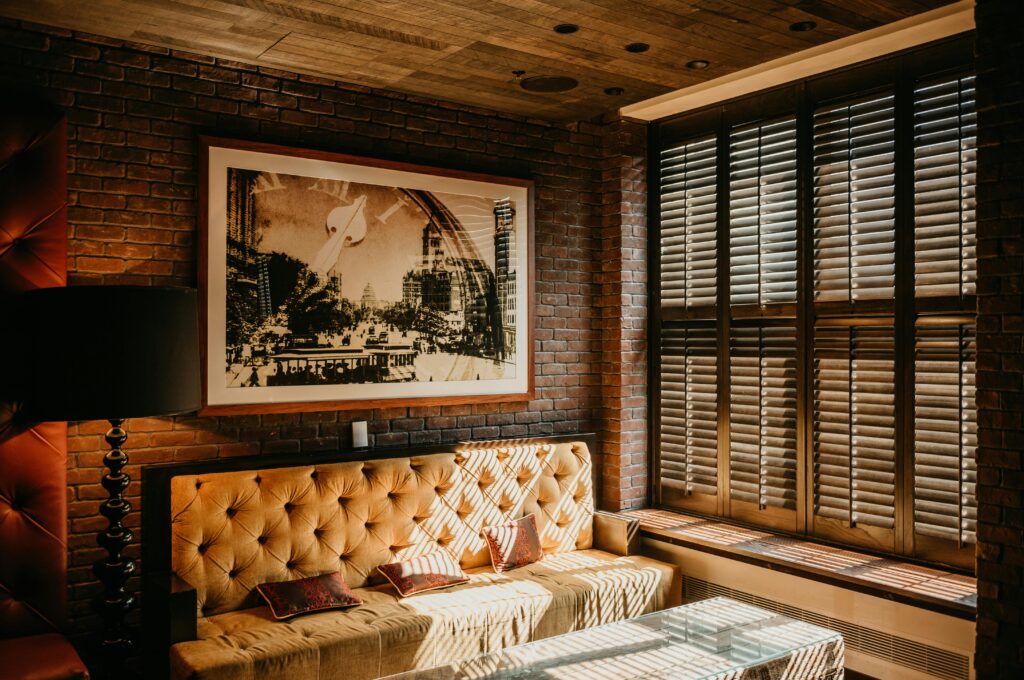
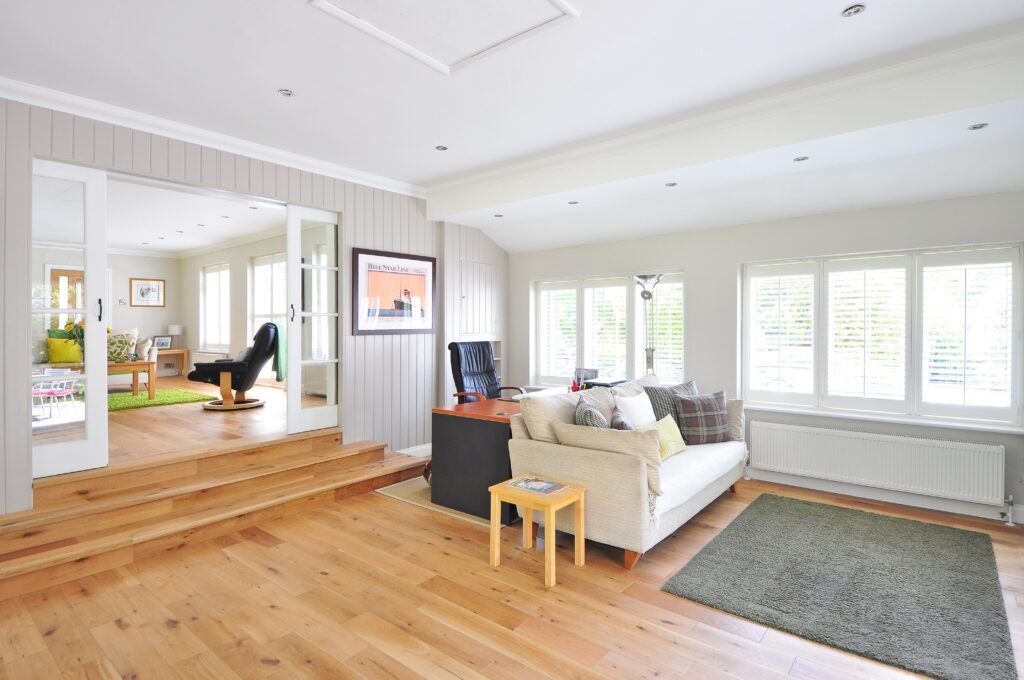
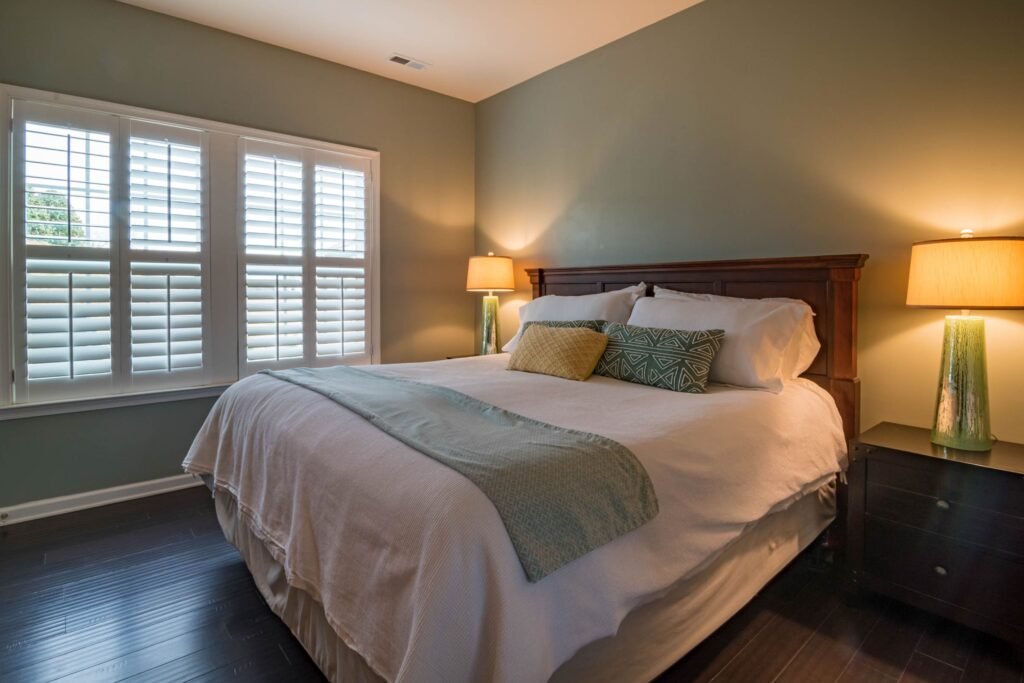
Plantation shutters are solid, made-to-measure window coverings with adjustable horizontal louvres, hinged within a frame fixed directly to the window recess or wall. The main difference between wooden plantation shutters and blinds is their form , plantation shutters are rigid and fixed to the frames of the window with metal hinges, while blinds are fitted to overhang the window with more flexibility and movement.
That structural difference , rigid and built-in versus flexible and overhanging , is the root of almost every other difference between the two options.
Light Control: Where Shutters Genuinely Excel
This is the area where the gap between shutters and roller blinds is most pronounced. A roller blind operates on a largely binary basis: down and closed, or up and open.Roller blinds are inexpensive but usually made of thin fabric and have little impact on heat, and they typically operate on an all-or-nothing basis , it’s either full sunlight or total darkness.
Plantation shutters work differently. Shutters are the masters of precision , adjustable slats let you control exactly how much sunlight streams into a room, from a soft morning glow with slats tilted slightly to a pitch-black effect when fully closed. This granular adjustment means you can let light in through the top of a window while maintaining privacy at eye level, or angle the louvres to bounce daylight off the ceiling rather than glaring directly into the room.
If you want a single static setting , blackout for a bedroom, or simply up during the day , a roller blind does that job well and at lower cost. If you want fine control that changes throughout the day without sacrificing privacy, shutters are the clear winner.
Privacy: A Significant Practical Difference
Privacy is where many Yorkshire homeowners , particularly those in terraced streets across Sheffield, Barnsley, and Rotherham , find the most meaningful difference.
Light-filtering and sheer roller blinds allow you to see out during the day while limiting visibility from outside, but at night with lights on inside, that privacy disappears. Shutters don’t have that problem , day or night, you stay in control.
This matters enormously for street-facing rooms. A roller blind that is partially open for daylight during the day becomes a fully transparent window once the lights go on inside in the evening, with no way to dim that transition gradually. Plantation shutters with louvres angled correctly maintain consistent privacy whether it is bright daylight outside or dark with the lamps on inside , a particular advantage for front rooms close to the pavement, which describes a large proportion of Sheffield’s Victorian terraced housing stock.
Durability and Lifespan: The Long-Term Cost Picture
This is where the upfront price difference needs proper context.
Plantation shutters can last over 10 years with proper care, whereas blinds may need to be replaced every 3 to 5 years. Other sources put good quality roller blinds at the higher end of that range , good quality made-to-measure blinds last 10 to 15 years with normal use, while budget blinds last 3 to 5 years.
Either way, the pattern is consistent: roller blinds, particularly budget options, need replacing multiple times over the lifespan of a single set of plantation shutters. Fabric fades with UV exposure, mechanisms wear out, and pull cords or chains eventually fail.
Plantation shutters won’t experience the bleaching or fading that affects blinds in varied colours over time.
Cost Comparison Over Time
| Factor | Roller Blinds | Plantation Shutters |
| Typical upfront cost (per window) | £40 to £150 | £350 to £850 |
| Typical lifespan | 3 to 10 years | 10 to 20+ years |
| Replacements over 15 years | 2 to 4 sets | 0 |
| Maintenance | Vacuum or spot clean fabric regularly | Wipe with damp cloth occasionally |
| Fading risk | Moderate to high with direct sun | Minimal |
Plantation shutters are the most significant investment you can make in window coverings, typically costing three to five times the equivalent made-to-measure blind. Over the lifetime of a property, the relative cost narrows considerably as blinds need replacing, and on a long enough time horizon shutters can represent genuinely better value.
For homeowners planning to stay in a property for many years, that long-term calculation often favours shutters despite the higher initial outlay. For renters or anyone likely to move within a few years, the lower upfront cost of roller blinds may make more practical sense.
Energy Efficiency: Shutters Hold a Real Advantage
Both options offer some thermal benefit, but they are not equivalent. Window shutters are among the most energy-efficient window coverings on the market, helping keep a room at a constant temperature by blocking cold draughts in winter and keeping rooms cool in summer. By contrast, roller blinds are inexpensive but usually made of thin fabric with little impact on heat retention.
This difference comes down to construction. A solid shutter panel with closed louvres creates a sealed barrier and a still air pocket against the glass. A roller blind, even when fully closed, typically leaves gaps at the sides where warm air can still escape around the edges of the fabric.
For Yorkshire homes , particularly the region’s substantial stock of older, solid-walled Victorian and Edwardian properties , this difference compounds over a long heating season. If energy efficiency is a genuine priority alongside light control and privacy, plantation shutters offer a meaningfully better thermal result than a standard roller blind.
Maintenance and Cleaning
Plantation shutters can be wiped clean with a damp cloth and are easy to keep in pristine condition, while most roller blinds made from fabric need vacuuming with an upholstery brush attachment or wiping down periodically. Fabric blinds can also trap dust and allergens over time, which is worth considering for households with allergy sufferers.
Shutters have a clear practical advantage here: no fabric to fade, stain, or require specialist cleaning, and no cords or mechanisms that wear out with daily use.
Installation: DIY-Friendly vs Professional Fitting
Roller blinds can typically be DIY-installed, while plantation shutters almost always require professional fitting , although Lafayette Shutters does offer a supply-only route for confident DIYers who want bespoke shutters without the full installation cost.
This is a genuine consideration if you want a same-day or same-week result. A roller blind can usually be measured, ordered, and fitted within days. Made-to-measure plantation shutters, because they are manufactured specifically for your windows, involve a longer lead time , typically 3 to 12 weeks depending on the material , though the long-term result is a far more substantial, permanent fixture.
Property Value: A Difference Worth Knowing
Shutters are one of a small number of interior features that estate agents consistently cite as positively affecting property value and saleability , they ‘add kerb appeal’, ‘make a room feel finished’, and ‘photograph beautifully’. A surveyor is likely to treat shutters as a fixture and fitting that adds to a property’s desirability, whereas blinds are generally expected as part of the baseline a buyer assumes a property will have, rather than a feature that enhances perceived value.
This is a meaningful difference if you are weighing up window coverings as part of a longer-term home improvement plan rather than a purely functional purchase. Roller blinds are practical and budget-friendly, but they are not typically viewed as a value-adding fixture in the way shutters are.
Which Rooms Suit Which Option Best
| Room Type | Better Suited To | Why |
| Street-facing living room | Plantation shutters | Privacy without losing light, especially in terraced housing |
| Bedroom (blackout priority) | Either, depending on fabric/configuration | Blackout roller blinds are effective and lower cost |
| Bathroom | UPVC plantation shutters | Fully waterproof, no fabric to mould or mildew |
| Home office / screen glare | Plantation shutters | Precise louvre control reduces glare more effectively |
| Rental property | Roller blinds | Lower upfront cost, easier to remove or replace |
| Bay window | Plantation shutters | Shaped panels follow the bay profile; blinds often look disjointed across multiple sections |
| Kitchen | UPVC or composite shutters | Easy wipe-clean surface, moisture resistant |
So, Are Plantation Shutters Better Than Roller Blinds?
The honest answer is that it depends on what you are optimising for. If your absolute priority is the lowest upfront cost or a fast, DIY-friendly install, roller blinds remain a sensible, practical choice , particularly for rental properties, bedrooms where blackout is the main requirement, or budget-conscious projects.
If privacy that holds up day and night, precise light control, long-term durability, genuine energy efficiency, and a positive contribution to property value matter to you, plantation shutters represent the stronger long-term investment , and for street-facing rooms in Yorkshire’s dense terraced housing stock, the privacy advantage alone is often the deciding factor.
There is no universally “correct” answer, which is why a proper in-home conversation about your specific windows, budget, and priorities tends to produce a better result than a generic recommendation.
Why Yorkshire Homeowners Choose Lafayette Shutters
Lafayette Shutters supplies and installs bespoke plantation shutters in Paulownia hardwood with ABS coating, UPVC, and basswood, fitted across Sheffield, Rotherham, Barnsley, Doncaster, Huddersfield, Chesterfield, and the wider Yorkshire and Derbyshire region. Every fitted order starts with a free, no-obligation home survey, where a specialist measures your windows precisely and talks you through material and style options without pressure.
For homeowners outside the installation area, or anyone confident with DIY, supply-only orders ship nationwide across Great Britain.
Frequently Asked Questions About Shutters vs Roller Blinds
Are plantation shutters worth the extra cost compared to roller blinds?
For homeowners planning to stay in a property for several years, plantation shutters often work out better value over time despite costing roughly three to five times more upfront than an equivalent made-to-measure roller blind. Roller blinds typically need replacing every 3 to 10 years depending on quality, while well-maintained plantation shutters can last 10 to 20 years or more. Whether the extra cost is justified depends on how long you intend to stay in the property and how much you value the additional privacy, light control, and durability shutters provide.
Do plantation shutters offer better privacy than roller blinds?
Yes, in a meaningful and practical way. Light-filtering roller blinds allow visibility out during the day but lose all privacy at night once interior lights are on. Plantation shutters with angled louvres maintain consistent privacy at any time of day, which is particularly valuable for street-facing rooms in terraced housing common across Sheffield, Barnsley, and Rotherham.
Which is better for energy efficiency, shutters or roller blinds?
Plantation shutters offer meaningfully better thermal performance than standard roller blinds. Shutters create a sealed barrier and a still air pocket against the glass when louvres are closed, while roller blinds , even fully closed , typically leave gaps at the sides that allow draughts and heat loss. For Yorkshire’s older, solid-walled properties, this difference can be noticeable over a full heating season.
Can roller blinds be used in bathrooms instead of shutters?
Fabric roller blinds are not generally recommended for bathrooms due to ongoing exposure to moisture and condensation, which can cause mould, staining, and fabric degradation over time. UPVC plantation shutters are fully waterproof and the more practical choice for bathrooms and other high-humidity rooms.
Do roller blinds or plantation shutters suit bay windows better?
Plantation shutters are generally better suited to bay windows because shaped or mitred panels can be manufactured to follow the precise angles of the bay, creating a seamless, flush result. Roller blinds fitted across multiple sections of a bay window often look disjointed, with visible breaks between each section.
How long do plantation shutters last compared to roller blinds?
Plantation shutters typically last 10 to 20 years or longer with proper care, while roller blinds generally last 3 to 10 years depending on fabric quality and usage. Budget roller blinds tend to be at the lower end of that range, while premium made-to-measure blinds can approach the upper end, though they still typically require replacement well before a comparable set of shutters.
Is it easier to install roller blinds myself than plantation shutters?
Generally yes. Roller blinds can usually be self-installed with basic tools and minimal preparation. Plantation shutters are bespoke, made-to-measure products that almost always benefit from professional fitting, particularly for bay windows or non-standard openings, though a supply-only DIY route is available for confident homeowners who want to fit them themselves.
Ready to Compare Shutters for Your Yorkshire Home?
If you are weighing up plantation shutters against roller blinds for your own windows, the best next step is a free, no-obligation home survey. Lafayette Shutters will talk you through real samples, discuss your specific windows and budget, and give you straightforward advice , without pushing you toward either option.
Call 0114 698 6245, email info@lafayette-shutters.co.uk, or use the online quote tool to get an instant price estimate for your home.