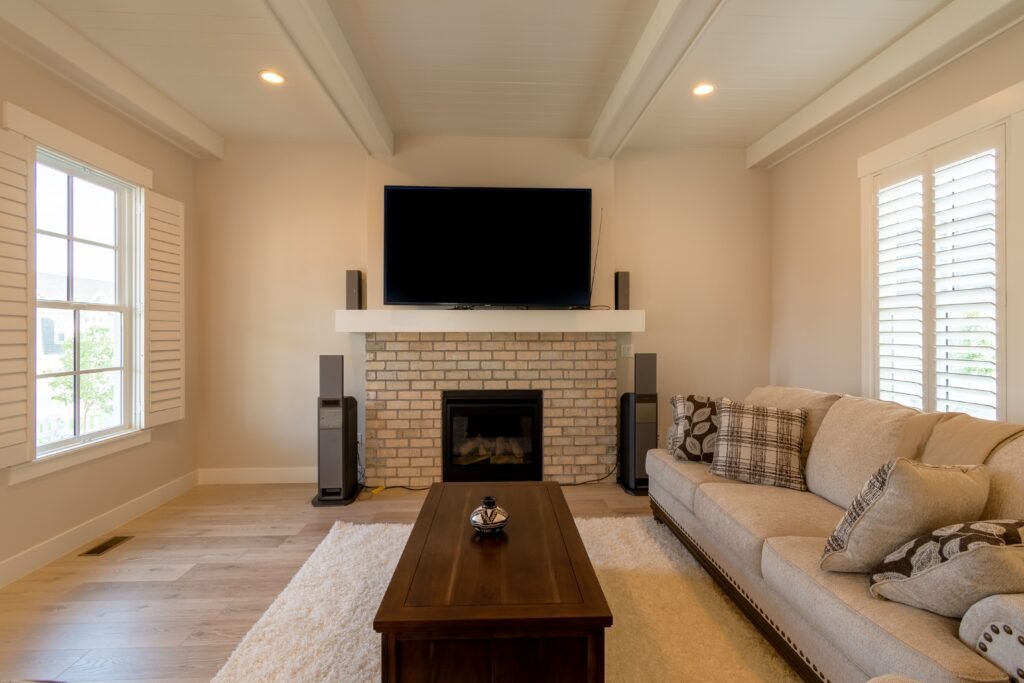
When homeowners in Yorkshire and across the UK begin researching plantation shutters, the style decision that generates the most uncertainty is the choice between full height and tier-on-tier. Both cover the whole window. Both are available in the same materials and colours. Both provide privacy and light control. And yet they are meaningfully different in how they function day to day, how they look in a room, and which situations each is best suited to.
This guide resolves that uncertainty with a clear, honest comparison covering function, aesthetics, cost, room suitability, and the specific situations where one style clearly outperforms the other so you can make the right choice for every window in your home.
The Core Difference: One Frame vs Two
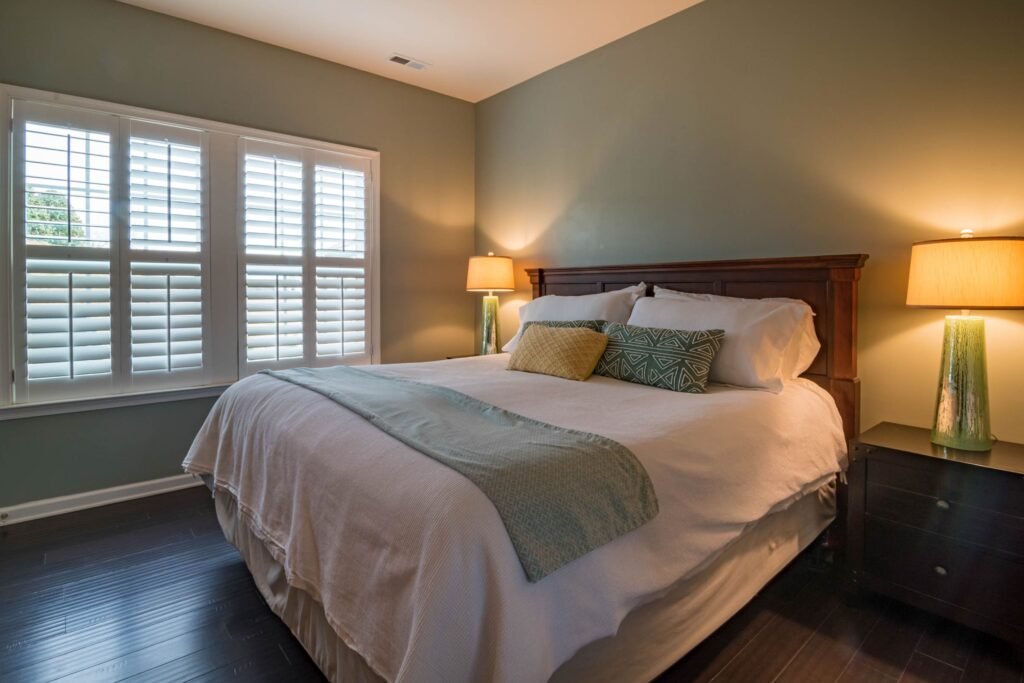
The structural distinction between the two styles is straightforward. Full height shutters use a single continuous set of panels that covers the entire window from sill to top frame, with louvres that can be angled to any position across the full height of the panel. Tier-on-tier shutters divide the window into two independent sections upper and lower each with its own separate set of panels that can be opened, closed, and louvred independently of the other.
That single structural difference one set of panels versus two is what drives every other distinction in operation, aesthetics, cost, and suitability. Understanding it clearly makes every other comparison in this guide easy to follow.
Full height shutters are the more popular of the two by a significant margin. Independent UK supplier data confirms that full height configurations account for approximately 72% of all plantation shutter installations in the UK a proportion that reflects the style’s combination of clean aesthetics, operational simplicity, and versatility across room types.
Full Height Shutters: What You Need to Know
How They Work
Full height shutters cover the entire window opening with one continuous frame. The panels hinge on the sides of the frame and fold back when full window access is needed. Within the closed panels, the louvres can be angled simultaneously via the tilt rod, or on shutters with a mid-rail or divider rail the upper and lower louvres can be angled independently while the panels themselves remain as one unit.
The mid-rail or divider rail is worth understanding specifically, because it is frequently misunderstood as a tier-on-tier feature. A full height shutter with a mid-rail is still a single panel system the panels do not open independently at the top and bottom. The mid-rail simply allows the louvres in the upper section to be tilted separately from those in the lower section, giving some of the light and privacy flexibility of tier-on-tier without the structural complexity of two separate panel sets. Windows over approximately 1.8 metres in height typically require a divider rail for structural integrity regardless of the louvre preference, and many homeowners specify a hidden rail which provides the same structural support but is concealed within the panel profile for a seamless appearance.
The Aesthetic Case for Full Height
Full height shutters create a continuous vertical line from sill to top frame. There is no horizontal division across the window no break in the panel profile at the midpoint. This uninterrupted coverage creates what designers describe as an architectural look: the shutters become part of the wall rather than a window covering applied to it.
This aesthetic works particularly well in rooms with tall ceilings and large windows common in Yorkshire’s Victorian and Edwardian terraces with their generous room proportions where the vertical continuity of full height shutters emphasises the height of the window rather than dividing it. In modern open-plan living spaces, the clean, uncluttered profile of full height shutters complements minimalist interior design more naturally than the layered appearance of tier-on-tier.
For homeowners prioritising a sleek, contemporary finish, full height is almost always the stronger aesthetic choice.
Where Full Height Shutters Work Best
Full height shutters perform optimally in a specific set of circumstances that applies to the majority of UK rooms.
Living rooms where the primary requirements are privacy and light control, not independent access to different parts of the window, benefit most from the simplicity of full height. A single adjustment of the tilt rod controls the whole window simultaneously, which is faster and more convenient than managing two independent sets of panels for rooms that are used throughout the day without a changing pattern of light requirements.
Rooms where the window does not face the street directly rear-facing rooms, side rooms, upper-floor rooms have less need for the independent privacy control that tier-on-tier provides. A full height shutter on a rear garden-facing window addresses the aesthetic and light control requirements without the additional cost and complexity of independent panels.
Hallways and landing windows benefit from the architectural, uninterrupted look of full height shutters, where the priority is usually appearance and basic privacy rather than nuanced light management.
Rooms with very large windows particularly bay windows across Sheffield, Barnsley, and Doncaster’s Victorian terraces are better served by full height than tier-on-tier on the largest panels, because the structural simplicity of a single-panel system handles large glazed areas more reliably than two independent panel sets that must align consistently across multiple sections of bay.
Tier-on-Tier Shutters: What You Need to Know
How They Work
Tier-on-tier shutters divide the window into two completely independent sections. The upper panels and lower panels each have their own frame, their own hinges, and their own louvres. Opening the upper panels fully for light does not affect the lower panels they remain closed and fully private. Closing the upper panels for complete coverage does not require the lower panels to be adjusted at all.
This independence is the defining feature of tier-on-tier shutters. The comparison often made is to a traditional stable door the top and bottom halves of the door are independent and can be used in any combination. Applied to a window, this means four functional positions are available at any time: both open for full window access, lower closed and upper open for maximum light with privacy, upper closed and lower open for an unusual but occasionally useful configuration, and both closed for full coverage and privacy.
The Aesthetic Case for Tier-on-Tier
Tier-on-tier shutters have a more layered, traditional appearance than full height the horizontal division across the midpoint of the window gives a pronounced visual break that some rooms benefit from and others do not. Period properties specifically, particularly Victorian and Edwardian terraces, sometimes suit this layered look because it echoes the proportional division of original sash windows, where the upper and lower sashes create a natural horizontal break at the window’s midpoint.
Some homeowners specifically choose tier-on-tier because they prefer the richer, more detailed appearance over the cleaner profile of full height shutters. This is a purely aesthetic preference with no functional implication both styles provide excellent privacy and light control. The choice between a contemporary, uninterrupted look and a traditional, layered one is the clearest aesthetic distinction between the two.
Where Tier-on-Tier Shutters Work Best
Tier-on-tier shutters deliver their most significant practical advantage in specific room and window situations where independent control of the upper and lower window genuinely changes what is possible day to day.
Street-facing bedrooms on ground floor or first floor where the requirement changes between daytime and night-time are the primary application. During the day, the lower panels remain closed and louvred to address the street-level sightline, while the upper panels are opened fully for maximum daylight. At night, both sets of panels are closed for complete privacy and any blackout combination that may be layered behind. This is a genuinely different capability from full height, where the same privacy-during-day and privacy-at-night requirement can only be met by adjusting the louvre angle of one continuous panel.
Windows on sloped Yorkshire streets where the sightline angle from uphill passers-by differs from the angle of level or downhill viewers benefit from tier-on-tier because the upper and lower louvres can be set to different angles simultaneously the lower section angled for pavement-level views, the upper section angled differently for the elevated sightline from uphill.
Rooms that need a specific function from the lower window independently of the upper a home office where the lower section faces a neighbouring property while the upper section faces open sky, for instance benefit from being able to manage the two sections completely separately.
Children’s bedrooms and nurseries where morning sleep is interrupted by early light from the upper window, while the lower section can remain closed throughout, benefit from the independent control that tier-on-tier provides without requiring a full blackout system across the entire window.
Side-by-Side Comparison
| Factor | Full Height | Tier-on-Tier |
| Panel operation | Single set louvres adjust together (or independently with mid-rail) | Two independent sets open, close, and louvre completely separately |
| Aesthetic | Clean, continuous, architectural | Traditional, layered, detailed |
| Light control | Good full window louvre adjustment | Excellent independent upper and lower control |
| Privacy control | Good consistent across full window | Excellent lower section private while upper section open |
| Ease of daily use | Simpler one operation manages whole window | Slightly more complex two independent operations |
| Cost | Lower | Typically 15 to 25% higher due to added complexity |
| Installation time | Shorter | Slightly longer two frame sets to align |
| Maintenance | Marginally simpler fewer moving parts | Marginally more two hinge sets and more hardware to check |
| Best for large windows | Yes handles wide and tall openings well | Better suited to standard and medium windows |
| Market share in UK | Approximately 72% of installations | Approximately 28% of installations |
| Insulation performance | Marginally better continuous frame has fewer join points | Very good minor thermal difference at the mid-frame join |
| Period property suitability | Excellent | Excellent layered look suits Victorian and Edwardian properties |
| Modern interior suitability | Excellent | Good the layered look suits some modern interiors less |
The Mid-Rail Option: Full Height Shutters With Independent Louvre Control
One important option that resolves many of the practical reasons to choose tier-on-tier is the full height shutter with a mid-rail also called a divider rail or hidden break.
A mid-rail divides the louvres of a full height shutter into upper and lower sections that can be angled independently, while the panels themselves remain as one continuous unit. This means you can angle the lower louvres upward for street-level privacy while angling the upper louvres downward to direct incoming light exactly the functional capability that draws homeowners to tier-on-tier without the additional cost, complexity, and panel-opening mechanism of two completely separate panel sets.
For many of the use cases where tier-on-tier seems to be the answer street-facing rooms, sloped-street sightlines, rooms where daytime light management changes throughout the day a full height shutter with a mid-rail achieves the same practical result at a lower cost and with a cleaner visual profile.
The distinction that mid-rail cannot replicate is the ability to open the upper panels fully while keeping the lower panels closed folding the top half of the window back completely. If physically opening the upper half of the window while keeping the lower half shuttered is an important functional requirement for your room, tier-on-tier is the only style that provides it. If the requirement is independent louvre angle control without needing to physically open different sections of the panel, a full height shutter with mid-rail is often a more practical and cost-effective solution.
This option is available across Lafayette’s range the free home survey is the right point to discuss which configuration works best for your specific window and requirements.
Cost Comparison: What the Price Difference Actually Reflects
Tier-on-tier shutters are typically 15 to 25% more expensive than equivalent full height shutters for the same window, and it is worth understanding exactly what that cost difference reflects.
The additional cost comes from three factors: double the number of hinge sets required, two separate frame assemblies that must be precisely aligned to sit flush against each other at the mid-window division, and the additional manufacturing time involved in producing and aligning two independent panel sets rather than one. The materials themselves the wood, the coating, the louvres are identical between the two styles at the same specification. The price difference is purely structural and mechanical.
For budget-conscious homeowners, this means two practical approaches. The first is to specify full height shutters with a mid-rail, which provides most of the functional benefit of tier-on-tier at full height pricing. The second is to use tier-on-tier selectively on the windows where independent panel operation genuinely adds daily value (street-facing bedrooms, rooms on sloped streets) while using full height on windows where the added flexibility of tier-on-tier would rarely be used in practice.
For an accurate cost comparison for your specific windows, use the Lafayette online quote tool or request a full quotation at the free home survey stage.
Which Style Is Right for Each Room?
| Room | Recommended Style | Why |
| Street-facing front living room | Full height with mid-rail | Addresses sightline with independent louvre control; cleaner aesthetic than tier-on-tier |
| Street-facing ground floor bedroom | Tier-on-tier | Independent panel operation allows maximum light from upper section while lower stays private |
| Rear-facing living room or dining room | Full height | No independent panel requirement; cleaner look; lower cost |
| Victorian bay window | Full height | Structural simplicity handles multiple bay sections more reliably on large glazed areas |
| Children’s bedroom or nursery | Tier-on-tier | Independent upper panel closing addresses early morning light without disturbing lower coverage |
| Home office with varied sightlines | Tier-on-tier | Upper and lower sections face different external conditions; independent control is genuinely useful |
| Bathroom | Full height UPVC | No independent operation requirement; UPVC for waterproofing |
| Hallway or landing | Full height | Aesthetic priority; no complex light management needed |
| Large patio door or bi-fold opening | Tracked shutters (separate style) | Sliding track system neither full height nor tier-on-tier panels are appropriate for very wide openings |
Child Safety Considerations for Both Styles
The British Blind and Shutter Association publishes child safety guidance that applies to all interior window shutters, including both full height and tier-on-tier configurations. Plantation shutters which operate via a tilt rod and panel hinges rather than pull cords are inherently safer than corded blinds for households with young children, since there are no dangling cords that present a strangulation risk.
Both styles are compliant with current UK child safety standards when correctly specified and installed. Tier-on-tier shutters have slightly more hardware at the mid-window level the additional hinge sets and frame edges which should be considered in very young children’s rooms where the accessible hardware at child height increases. Professional installation ensures all hardware is properly secured and seated, eliminating any sharp edges or protruding fixings.
Common Buyer Misconceptions
A few recurring misconceptions about this choice are worth addressing directly before you make a decision.
One is that tier-on-tier provides significantly better privacy than full height. In practice, both styles provide equivalent privacy when louvres are correctly angled the advantage of tier-on-tier is independent operation of sections, not stronger privacy from either section when closed.
Another is that full height shutters with a mid-rail are the same as tier-on-tier. They are not the mid-rail allows independent louvre angle control but does not allow independent panel operation. Understanding this distinction determines whether mid-rail solves your requirement or whether full tier-on-tier is necessary.
A third is that tier-on-tier is always better because it offers more options. More options add more complexity two sets of panels to adjust, more hardware to maintain, and a higher initial cost. For windows where the added flexibility is rarely used in practice, full height is the more appropriate and cost-effective choice.
Lafayette Shutters: Both Styles Across Yorkshire and Derbyshire
Lafayette Shutters supplies and installs full height and tier-on-tier plantation shutters across Sheffield, Rotherham, Barnsley, Doncaster, Huddersfield, Chesterfield, and the wider Yorkshire and Derbyshire region. Both styles are available in Paulownia hardwood with ABS coating, UPVC composite, and basswood across all louvre sizes, colours, and frame configurations.
Every fitted order begins with a free home survey where a specialist assesses every window in your home, discusses which style serves each room’s specific requirements, and provides a no-obligation written quote covering both options so you can compare directly. For homeowners outside the installation area, supply-only orders ship nationwide across Great Britain. The Lafayette FAQ covers specification details for both styles, including mid-rail options, louvre sizes, and lead times. For a specific recommendation on which style suits your home, contact the team directly.
Frequently Asked Questions About Full Height vs Tier-on-Tier Shutters
What is the difference between full height and tier-on-tier shutters?
Full height shutters cover the entire window with one continuous set of panels, with louvres adjustable across the full height simultaneously or independently with a mid-rail. Tier-on-tier shutters divide the window into two completely independent sets of panels upper and lower that open, close, and louvre completely separately. Full height is simpler to operate and provides a cleaner aesthetic; tier-on-tier provides greater operational flexibility at a higher cost.
Are tier-on-tier shutters worth the extra cost?
Tier-on-tier shutters are worth the additional 15 to 25% cost in specific situations: street-facing bedrooms where independent panel operation changes what is practically possible day to day, rooms on sloped streets with variable sightline angles, and children’s rooms or home offices where different parts of the window face genuinely different external conditions. For rear-facing rooms, hallways, or any window where independent panel operation would rarely be used in practice, full height shutters potentially with a mid-rail deliver equivalent results at a lower cost.
Can full height shutters provide independent light control?
Yes, when specified with a mid-rail or divider rail. This feature divides the louvres of a full height shutter into upper and lower sections that tilt independently, providing much of the light and privacy flexibility of tier-on-tier without the added cost and complexity of two separate panel sets. Windows over approximately 1.8 metres tall typically include a mid-rail as standard for structural reasons. A hidden rail option provides the same functionality with no visible break in the panel profile.
Which shutter style is better for a bedroom?
For most bedrooms, full height shutters with a mid-rail provide all the light control and privacy needed. For street-facing bedrooms particularly ground floor rooms in Yorkshire’s terraced housing tier-on-tier provides the additional advantage of independently opening the upper panels for maximum daylight while keeping the lower panels completely closed and private. For bedrooms where blackout is a priority, either style can be combined with an integrated blackout blind behind the panels.
Which style suits Victorian and Edwardian properties best?
Both styles suit period properties well, though for different reasons. Full height shutters emphasise the height and scale of Victorian and Edwardian windows with an architectural, uninterrupted look. Tier-on-tier echoes the natural division of original sash windows and provides a layered, traditional appearance that some homeowners prefer for period rooms. The choice is ultimately aesthetic both function equally well in period properties.
Is tier-on-tier harder to maintain than full height?
Marginally, because there are more moving parts two sets of hinges and two frame assemblies rather than one. In practice, with professionally installed quality shutters, the difference in maintenance is minimal. The annual hardware check recommended for all plantation shutters simply covers twice the number of hinge points on a tier-on-tier installation. Tier-on-tier shutters are not recommended on very large glazed openings, where the complexity of maintaining alignment between the two panel sets across a wide span increases over time.
How much more expensive are tier-on-tier shutters than full height?
Tier-on-tier shutters typically cost 15 to 25% more than equivalent full height shutters for the same window, reflecting the additional manufacturing complexity, double the hinge sets, and two frame assemblies that must be precisely aligned. The material itself wood species, coating, louvre size is identical between the two styles at the same specification. Use the Lafayette online quote tool for a direct cost comparison on your specific windows.
Ready to Choose the Right Style for Your Yorkshire Home?
Lafayette Shutters installs made-to-measure plantation shutters in both full height and tier-on-tier configurations across Sheffield, Rotherham, Barnsley, Doncaster, Huddersfield, Chesterfield, and across Yorkshire and Derbyshire. Every fitted order starts with a free home survey to assess every window individually and recommend the right style for each room.
Call 0114 698 6245, email info@lafayette-shutters.co.uk, or use the online quote tool for an instant price estimate on either style.