Choosing between uPVC, composite and hardwood internal shutters is the material decision that most South Yorkshire homeowners get wrong not because they lack information, but because the information available online is rarely applied to the specific housing stock, climate, and window types that define this region. What suits a modern detached property in Doncaster’s commuter belt performs differently in a Victorian stone terrace in Barnsley or a bay-fronted Edwardian semi in Sheffield’s Crookes. This guide compares the three main internal shutter materials honestly and specifically, with South Yorkshire’s housing context at the centre of every recommendation.
Lafayette Shutters is based in Rotherham and installs across the full South Yorkshire region Sheffield, Rotherham, Barnsley, Doncaster, and Huddersfield as its core territory. The comparisons and recommendations in this guide reflect genuine installation experience across South Yorkshire’s diverse property stock, not generic UK-wide content applied to a local search term.
Why Material Choice Matters More in South Yorkshire Than in Many Other Regions
South Yorkshire’s housing stock creates specific material challenges that are worth understanding before comparing products.
The region is dominated by Victorian and Edwardian terraces and semi-detached properties concentrated across Sheffield’s inner suburbs, Rotherham’s historic borough streets, Barnsley’s former mining communities, and Doncaster’s older residential areas. These properties share characteristics that directly affect shutter material performance: solid brick or stone walls with limited insulation, original timber window frames that have settled and shifted over decades, rooms that experience significant temperature variation between seasons, and in Yorkshire’s older terrace streets specifically, above-average rates of damp.
Government data from the Ministry of Housing, Communities and Local Government’s Local Authority Housing Stock Condition Modelling 2024 found that terraced homes in Yorkshire and the Humber show the highest rates of damp of any region in England. For South Yorkshire homeowners, this context reinforces why moisture resistance matters in material choice not just for obvious wet rooms like bathrooms, but for any room in an older property where damp ingress through walls or condensation on cold window frames is a realistic condition.
The region’s newer housing stock new-build developments across Waverley, Catcliffe, Bessacarr, and Doncaster’s expanding eastern corridors presents a different challenge. These properties typically have uPVC double-glazed casements rather than timber frames, which affects which shutter frame configuration suits the window and whether certain solid timber materials risk binding against the window frame due to differential thermal expansion.
Understanding these two distinct South Yorkshire contexts older period housing versus modern new builds is the foundation for a useful material comparison.
The Three Main Internal Shutter Materials Compared
uPVC Internal Shutters
uPVC (Unplasticised Polyvinyl Chloride) is a fully synthetic, non-porous material. It contains no wood component, which means moisture cannot penetrate it regardless of the humidity level of the room or the frequency of exposure. uPVC internal shutters are completely waterproof they will not warp, swell, delaminate, or develop mould on their surface under normal domestic conditions in any room type.
For South Yorkshire homeowners, uPVC is the definitive specification for bathroom and en-suite windows, kitchen windows with active cooking, utility rooms, and any room in the region’s older housing stock where damp or condensation is a known issue. The material’s non-porous construction makes it immune to the moisture conditions that cause MDF composite and standard hardwood to fail over time in these environments.
Shutterworld UK’s 2026 guidance confirms an important practical point for South Yorkshire’s significant new-build housing stock: when fitting shutters on uPVC window frames specifically, choosing composite or uPVC shutters reduces the risk of binding or warping that can occur when solid timber panels expand and contract at a different rate to a uPVC frame. For Waverley, Catcliffe, and Doncaster new-build properties with uPVC casement windows, this is a meaningful specification consideration rather than a minor footnote.
Lafayette’s European UPVC range ships in 3 to 4 weeks from confirmed order the fastest lead time in the range and is available in white, the most popular shutter colour across South Yorkshire. A 10-year warranty covers normal domestic use. Supply-and-fit pricing for uPVC internal shutters in South Yorkshire runs from approximately £150 to £230 per square metre according to current UK market data from Shutters Factory’s 2026 FAQ toward the lower to mid-range of the three material categories.
Where uPVC internal shutters work best in South Yorkshire:
- Bathrooms and en-suites across Sheffield, Rotherham, Barnsley, and Doncaster
- Kitchens with regular cooking activity
- Utility rooms and downstairs cloakrooms
- Any room in older period properties where damp or condensation is a recognised issue
- New-build properties with uPVC window frames, where differential thermal expansion between timber shutters and uPVC windows is a risk
Where uPVC internal shutters are not the first choice:
- Living rooms and bedrooms in period properties where aesthetic warmth and the character of natural wood are priorities
- Large window panels over 3 metres in height, where uPVC’s weight relative to equivalent hardwood panels places greater strain on hinges over time
- Rooms requiring re-painting in a colour other than white, since standard uPVC cannot be successfully repainted once installed
Composite Internal Shutters
Composite is the most frequently misunderstood category in the South Yorkshire shutter market, because the term covers materials with meaningfully different properties. For the purposes of this comparison, composite refers to two specific types used across South Yorkshire installations: engineered wood MDF composite (MDF core with polymer coating) and ABS composite (Acrylonitrile Butadiene Styrene).
MDF composite shutters are the most widely sold internal shutter type globally and represent the most cost-effective entry point into bespoke made-to-measure shutters. The engineered wood core accepts a high-quality painted finish and produces a dense, substantial feel that many homeowners prefer over lighter synthetic alternatives. Supply-and-fit pricing for MDF composite typically runs toward the lower end of the composite range.
The critical limitation of MDF composite for South Yorkshire specifically is moisture. MDF is an engineered wood product it will absorb moisture through hinge fixings, louvre pivot points, and any micro-gap in the polymer coating over time. In Yorkshire’s older terrace housing where above-average damp rates compound the risk, MDF composite should be limited strictly to dry living rooms and bedrooms with no humidity concern. It should not be used in bathrooms, kitchens, utility rooms, or any room in an older period property where damp or condensation is a realistic seasonal condition.
ABS composite occupies a more capable mid-market position. ABS is a robust, dimensionally stable synthetic polymer with genuine moisture tolerance not the full waterproofing of uPVC, but significantly better performance than MDF in moderate-humidity environments. ABS composite shutters resist the UV yellowing that affects cheaper PVC products over time, accept a wider range of paint finishes than standard uPVC, and can be re-painted if the colour needs updating something standard UPVC cannot accommodate. Premium composite shutters achieve a convincingly authentic wood-like appearance through advanced manufacturing techniques that most viewers find indistinguishable from painted hardwood in a furnished room.
Shuttercraft’s independent 2026 comparison confirms that composite shutters offer excellent durability particularly in high-traffic environments, while hardwood offers the lightweight strength advantage that matters for larger windows. This distinction maps directly onto South Yorkshire’s housing stock: for standard bedroom and living room windows in Victorian terraces, composite performs reliably; for the wider bay windows and full-height configurations common in period properties, hardwood’s lower weight relative to composite pays dividends over the product’s lifespan.
Where composite internal shutters work best in South Yorkshire:
- Standard-sized living rooms and bedrooms across Sheffield, Rotherham, Barnsley, and Doncaster where cost efficiency is a priority
- Rooms where the smooth painted finish of composite is preferred over the grain of natural wood
- Properties furnishing multiple rooms at once, where composite’s lower price point enables a full-house order within a tighter budget
- Moderate-humidity kitchens and utility rooms where ABS composite’s better moisture tolerance suits the environment
Where composite internal shutters are not the first choice:
- Bathrooms and wet rooms, where uPVC’s full waterproofing is the correct specification
- Large windows or bay openings, where hardwood’s lighter weight reduces long-term stress on hinges and frame joints
- Period properties in Sheffield or Rotherham where the natural warmth and insulating properties of real wood are priorities
- Rooms exposed to sustained south-facing sun, where ABS performs better than standard PVC but premium hardwood with UV-stable coating remains the most robust long-term choice
Hardwood Internal Shutters
Hardwood internal shutters represent the premium specification in the South Yorkshire market and the material category where the investment-to-outcome ratio is clearest for homeowners planning to stay in a property for many years.
Lafayette’s flagship hardwood is Paulownia with ABS coating a fast-growing, lightweight, dimensionally stable timber finished with an ABS polymer surface that provides moisture resistance without compromising the insulating properties of the wood beneath. Paulownia is significantly lighter than both MDF composite and uPVC panels of equivalent size, which matters substantially for two reasons specific to South Yorkshire’s housing stock.
First, the lighter weight places less ongoing strain on hinges and frame joints throughout the product’s lifespan. A hardwood shutter panel opening and closing thousands of times over fifteen years exerts less cumulative stress on its hardware than an equivalent composite panel which is one of the primary reasons hardwood shutters consistently outperform composite on longevity when used in appropriate dry-room applications. Second, for South Yorkshire’s many bay-fronted Victorian properties common across Sheffield’s Crookes, Nether Edge, and Broomhill; Rotherham’s Clifton and Moorgate; Barnsley’s older residential streets lighter panels are structurally preferable across the wide multi-section spans that a bay window installation creates.
The Shutter Studio’s 2026 independent comparison confirms that wooden shutters remain the more effective insulator than PVC alternatives. This thermal advantage is directly relevant to South Yorkshire. Historic Scotland’s Technical Paper 1, produced by Dr Paul Baker at Glasgow Caledonian University, demonstrated that timber shutters reduce heat loss through single-glazed windows by up to 51% compared to 14% for heavy curtains and South Yorkshire’s Victorian and Edwardian housing stock has a substantial proportion of properties with single glazing or early double glazing where this thermal advantage is most pronounced.
Hardwood shutters are available in stained finishes showing the natural grain an option that composite and uPVC cannot offer as well as the full painted colour range. For period properties in Sheffield’s conservation areas, Rotherham’s historic streets, or the Peak District fringe villages of north Derbyshire, a natural stain finish on Paulownia hardwood complements the architectural character of the property in a way that a painted synthetic surface cannot replicate.
Supply-and-fit pricing for hardwood internal shutters in South Yorkshire runs from approximately £220 to £320 per square metre according to Shutters Factory’s 2026 UK FAQ toward the upper end of the three material categories, reflecting the premium timber and the longer manufacturing lead time of 10 to 12 weeks from confirmed order.
Where hardwood internal shutters work best in South Yorkshire:
- Living rooms and bedrooms in period properties across Sheffield, Rotherham, Barnsley, and Doncaster where aesthetic quality and insulation are equal priorities
- Large windows and bay openings, where the lighter weight of Paulownia hardwood compared to composite reduces long-term hinge stress
- Properties with single or early double glazing, where the greater thermal performance of hardwood over composite or uPVC maximises the heat-retention benefit
- Rooms receiving a natural stain finish, where the wood grain aesthetic is a design priority
- Long-term investments in properties where the homeowner plans to remain for many years and the 10 to 12 week lead time is a practical trade-off for superior longevity
Where hardwood internal shutters are not the first choice:
- Bathrooms and wet rooms, where uPVC is the correct specification regardless of budget
- Projects requiring the fastest lead time, where uPVC’s 3 to 4 week European range is a practical necessity
- Budget-constrained whole-house projects where composite’s lower price point enables full coverage that hardwood’s cost does not
| Factor | uPVC Internal Shutters | Composite (MDF/ABS) Internal Shutters | Hardwood (Paulownia ABS) Internal Shutters |
| Moisture resistance | Excellent fully waterproof | MDF limited; ABS moderate | Good with ABS coating |
| Weight | Moderate to heavy | Heavy (MDF); moderate (ABS) | Lightest best for large windows |
| Thermal insulation | Moderate | Moderate | Best wood is a natural insulator |
| Best room applications | Bathrooms, kitchens, damp rooms | Living rooms, bedrooms (MDF/ABS); moderate-humidity kitchens (ABS) | Living rooms, bedrooms, hallways, large windows |
| Aesthetic options | White; no grain or stain | Painted colours; no grain option | Painted colours and natural stain finishes |
| Re-paintability | No uPVC cannot be repainted | Yes (MDF and ABS) | Yes |
| Suitability for uPVC frames | Excellent no differential expansion risk | Good | Caution differential expansion risk |
| South Yorkshire new-build suitability | Excellent | Good | Use with care on uPVC-framed windows |
| South Yorkshire period property suitability | Good (wet rooms); fair (dry rooms) | Good (dry rooms only) | Excellent |
| Supply-and-fit price per sqm | £150 to £230 | £150 to £230 (MDF lower end; ABS upper end) | £220 to £320 |
| Lead time (Lafayette) | 3 to 4 weeks (European range) | Varies by product | 10 to 12 weeks |
| Warranty (Lafayette) | 10 years | Varies | 10 years (Paulownia ABS) |
| Lifespan in correct application | 15+ years | 10 to 15 years | 15 to 20+ years |
| Natural grain finish available | No | No | Yes in stain options |
Full Comparison Table: uPVC vs Composite vs Hardwood in South Yorkshire
Which Material Suits Which South Yorkshire Property?
Translating the material comparison into a practical recommendation for specific South Yorkshire property types:
Victorian and Edwardian Terraces (Sheffield, Rotherham, Barnsley, Doncaster)
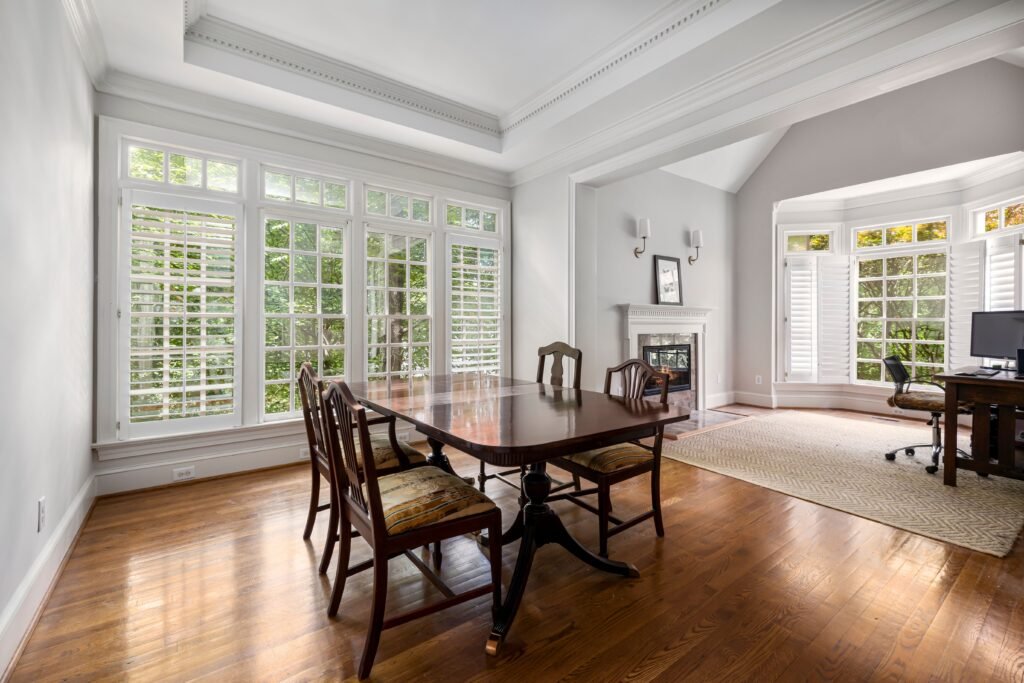
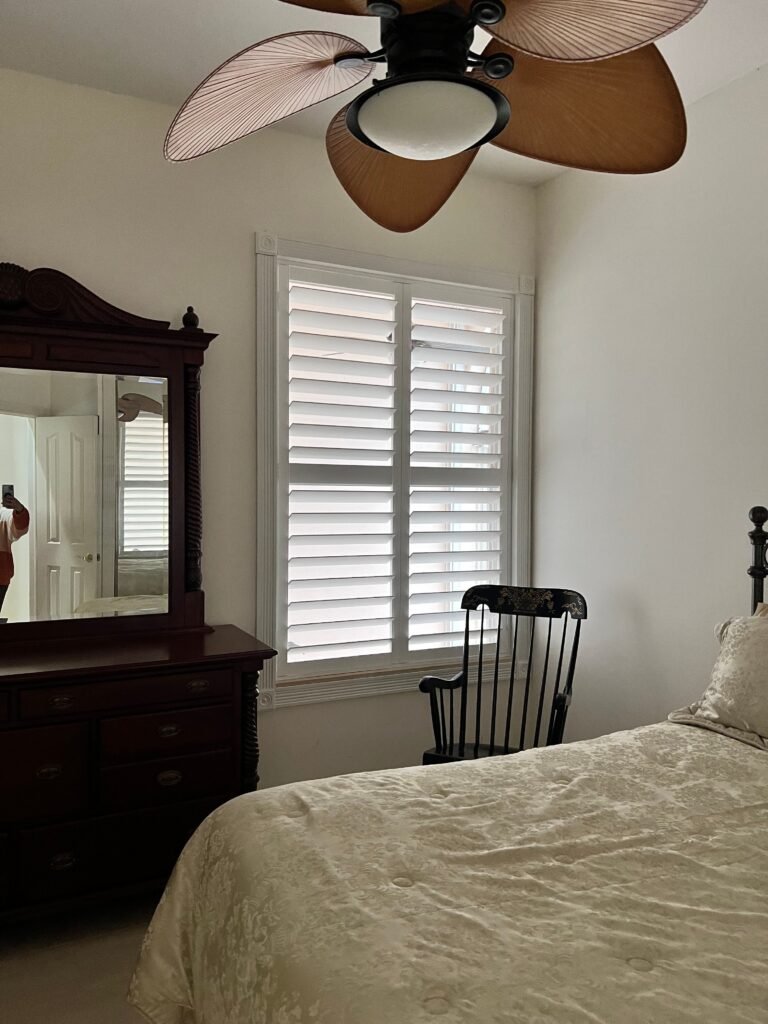
For the front living room and bedroom windows: Paulownia hardwood with ABS coating. The lighter weight handles the full-height and bay window configurations common in these properties better than composite, the insulation advantage is most pronounced on the single or early double-glazed windows many of these properties retain, and the aesthetic quality suits the character of the architecture.
For bathrooms and kitchens in the same properties: uPVC composite. These rooms in Yorkshire’s older terrace stock face the highest moisture and damp risk in the region, and uPVC’s full waterproofing is non-negotiable. For quick installation particularly if the bathroom renovation is underway and a window covering is needed promptly Lafayette’s European UPVC range at 3 to 4 weeks is the most practical route.
Interwar Semi-Detached Properties (Across South Yorkshire)
Interwar semis across Rotherham, Doncaster, and Barnsley typically have more generous room proportions than terraces, larger windows, and somewhat better thermal fabric than Victorian stock. For these properties, ABS composite is a strong mid-market choice for living rooms and bedrooms more moisture-tolerant than MDF, available in a wider colour range than standard uPVC, and at a lower price point than hardwood for homeowners furnishing multiple rooms. Hardwood remains the premium choice for any window over 2 metres in height or any bay window opening.
New-Build Developments (Waverley, Catcliffe, Bessacarr, Doncaster Corridors)
For new-build properties with uPVC casement windows: composite or uPVC shutters are specifically recommended over solid timber, since differential thermal expansion between a timber shutter panel and a uPVC window frame can cause binding or warping over time. uPVC shutters for bathrooms and kitchens. ABS composite for living rooms and bedrooms. For new-build patio doors and bi-fold openings increasingly common in Waverley’s open-plan kitchen-diner layouts tracked shutters in composite are available through Lafayette’s supply and install service.
Stone-Built Properties (North Derbyshire and South Yorkshire Villages)
For stone cottages, former farmhouses, and village properties on the South Yorkshire and Derbyshire border: Paulownia hardwood in natural stain finishes is the most appropriate specification both aesthetically and practically. Deep, irregular stone reveals require professional in-person measurement a free home survey rather than supply-only to ensure the shutter frame seats correctly against the stonework and achieves the tight reveal fit that makes the thermal and privacy benefits real.
Cost Guide: Internal Shutters in South Yorkshire by Material
Current 2026 pricing data for South Yorkshire, based on independent UK market sources and Lafayette’s own range:
| Window Type | uPVC (Supply and Fit) | Composite (Supply and Fit) | Hardwood (Supply and Fit) |
| Small bedroom/bathroom (60 x 100cm) | £300 to £480 | £320 to £520 | £380 to £580 |
| Standard living room (100 x 120cm) | £450 to £700 | £500 to £800 | £580 to £900 |
| Bathroom window (60 x 80cm) | £280 to £460 | Not recommended (MDF); £300 to £480 (ABS) | Not recommended |
| Victorian bay window (3 section) | £900 to £1,600 | £1,000 to £1,800 | £1,200 to £2,200 |
For supply-only orders across South Yorkshire where the homeowner handles fitting pricing is typically 30 to 50% lower across all three material categories. The Lafayette online quote tool delivers an instant estimate based on your specific window dimensions for any material type.
How to Order Internal Shutters in South Yorkshire
Lafayette Shutters installs uPVC, composite, and hardwood internal shutters across Sheffield, Rotherham, Barnsley, Doncaster, Huddersfield, and north Derbyshire. Every fitted order begins with a free home survey a specialist visits your South Yorkshire property, assesses each window individually, confirms the right material for each room, shows you physical samples, and provides a written no-obligation quote.
For homeowners outside the core installation area, supply-only orders ship nationwide across Great Britain with full measuring instructions. The Lafayette FAQ covers every material, style, and specification question in detail, or the team can be reached directly at the contact page.
Frequently Asked Questions About Internal Shutters in South Yorkshire
Which internal shutter material is best for South Yorkshire homes?
There is no single best material for all South Yorkshire homes the right choice depends on the specific room, the property type, and your priorities. For Victorian and Edwardian period properties across Sheffield, Rotherham, Barnsley, and Doncaster: Paulownia hardwood with ABS coating for living rooms and bedrooms, uPVC composite for bathrooms and kitchens. For new-build properties with uPVC window frames: composite or uPVC shutters for all rooms, avoiding solid timber due to differential thermal expansion risk. For a specific recommendation based on your property, the free home survey is the right starting point.
What is the difference between uPVC and composite internal shutters?
uPVC (Unplasticised Polyvinyl Chloride) is a specific fully synthetic polymer fully waterproof and non-porous. Composite is a broader term covering several distinct materials, including MDF with polymer coating (not waterproof), ABS composite (moisture-tolerant), and uPVC itself. Confusingly, uPVC is technically a type of composite shutter in the broad sense but in practice, when South Yorkshire suppliers use “composite” and “uPVC” as separate categories, they typically mean MDF or ABS composite versus pure uPVC. Always ask a supplier to name the specific material rather than accepting either label as sufficient.
Are hardwood shutters better than composite in South Yorkshire?
For period properties in South Yorkshire, hardwood Paulownia with ABS coating outperforms standard composite on thermal insulation, lifespan, large-window suitability, and the aesthetic warmth of natural wood. For bathrooms and kitchens in the same properties, uPVC is the correct specification regardless of budget. For modern new-build properties with uPVC window frames, composite shutters are the safer material choice over solid timber due to differential expansion behaviour. The best material is the right material for the specific room and window not a single universal answer.
How much do internal shutters cost in South Yorkshire?
Supply-and-fit pricing in South Yorkshire ranges from approximately £280 to £480 for a small bathroom window in uPVC, to £500 to £800 for a standard living room window in composite, to £580 to £900 for the same window in Paulownia hardwood. Victorian bay windows run from £900 to £2,200 depending on material and configuration. Supply-only pricing is typically 30 to 50% lower across all materials. Use the Lafayette online quote tool for an instant estimate based on your specific windows.
How long do internal shutters last in South Yorkshire?
In correct applications: uPVC composite typically lasts 15 years or more. MDF composite typically lasts 10 to 15 years in dry rooms. ABS composite achieves a similar lifespan to uPVC in moderate-humidity applications. Paulownia hardwood with ABS coating can last 15 to 20 years or more. Lifespan is significantly shortened by using the wrong material in the wrong room particularly MDF composite in bathrooms or any South Yorkshire room where damp is a seasonal issue. Lafayette’s uPVC and Paulownia ABS shutters carry a 10-year warranty; basswood carries five years.
Can internal shutters be fitted to uPVC windows in South Yorkshire new builds?
Yes. Plantation shutters are fitted within their own independent frame that sits inside the window reveal, without drilling through the sealed glazing unit. However, the material specification matters for new-build properties: composite or uPVC shutters are specifically recommended over solid timber for windows with uPVC frames, because timber panels and uPVC frames expand and contract at different rates with temperature changes, which can cause binding or warping over time. Composite and uPVC shutters expand at a more compatible rate to uPVC window frames.
Ready to Choose the Right Internal Shutters for Your South Yorkshire Home?
Lafayette Shutters installs bespoke uPVC, composite, and hardwood internal shutters across Sheffield, Rotherham, Barnsley, Doncaster, Huddersfield, Chesterfield, and wider Yorkshire and Derbyshire. Every fitted order starts with a free home survey a specialist assesses every window, recommends the right material for each room, and provides a written no-obligation quote.
Call 0114 698 6245, email info@lafayette-shutters.co.uk, or use the online quote tool for an instant price estimate across all three material types.