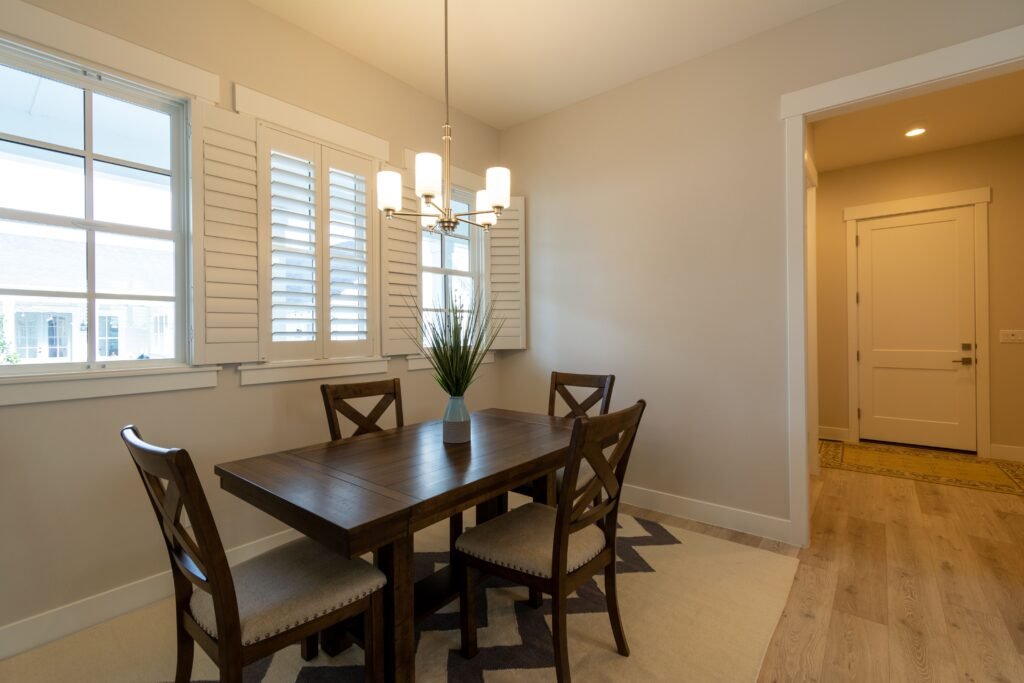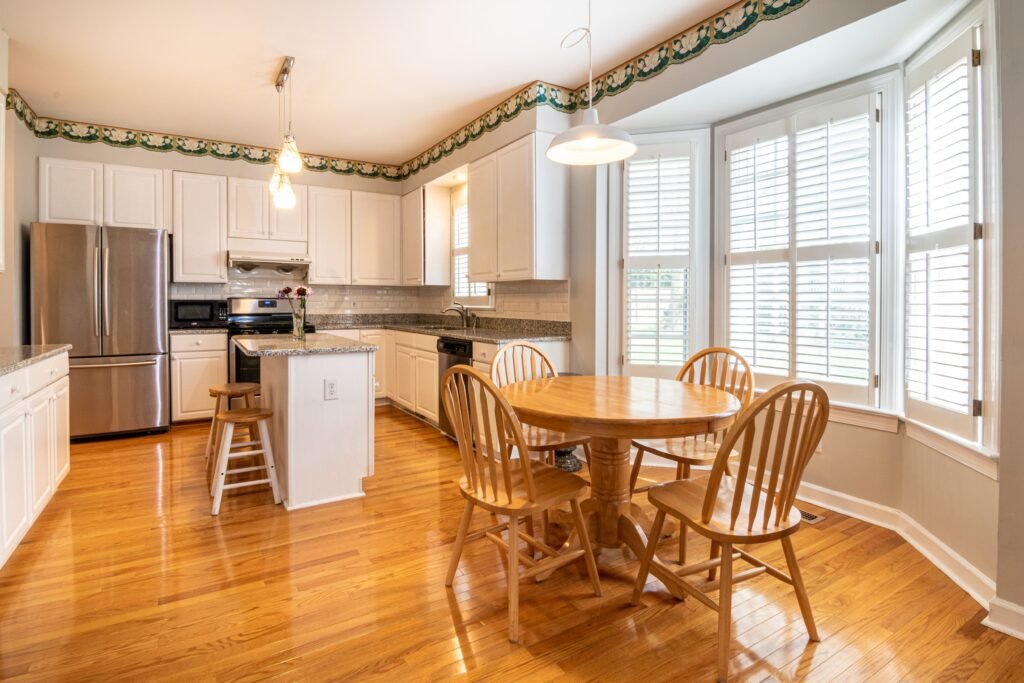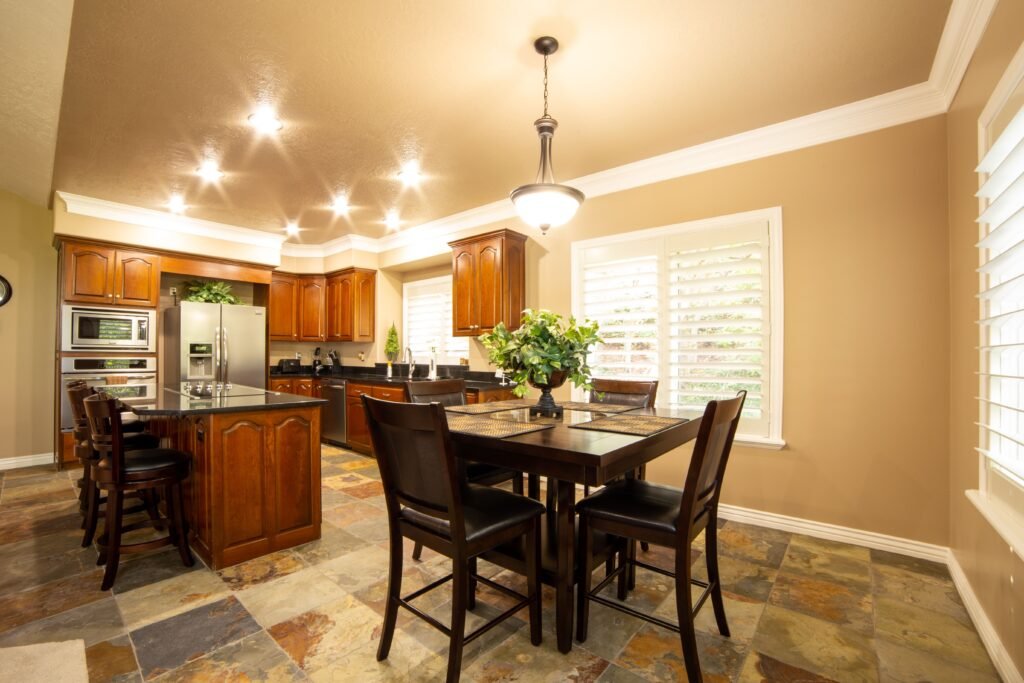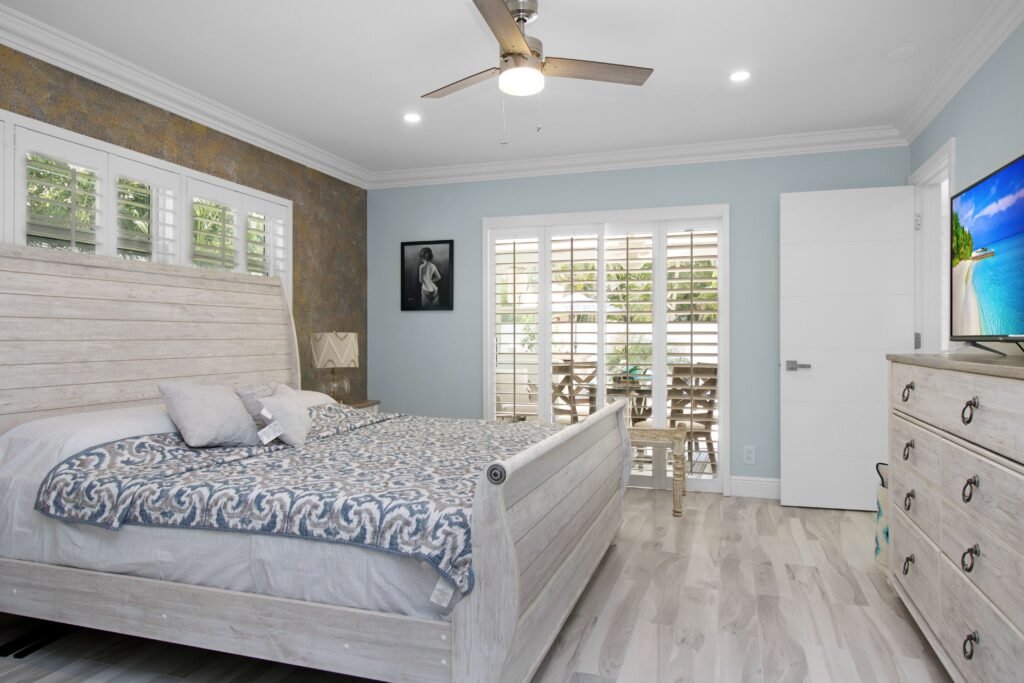
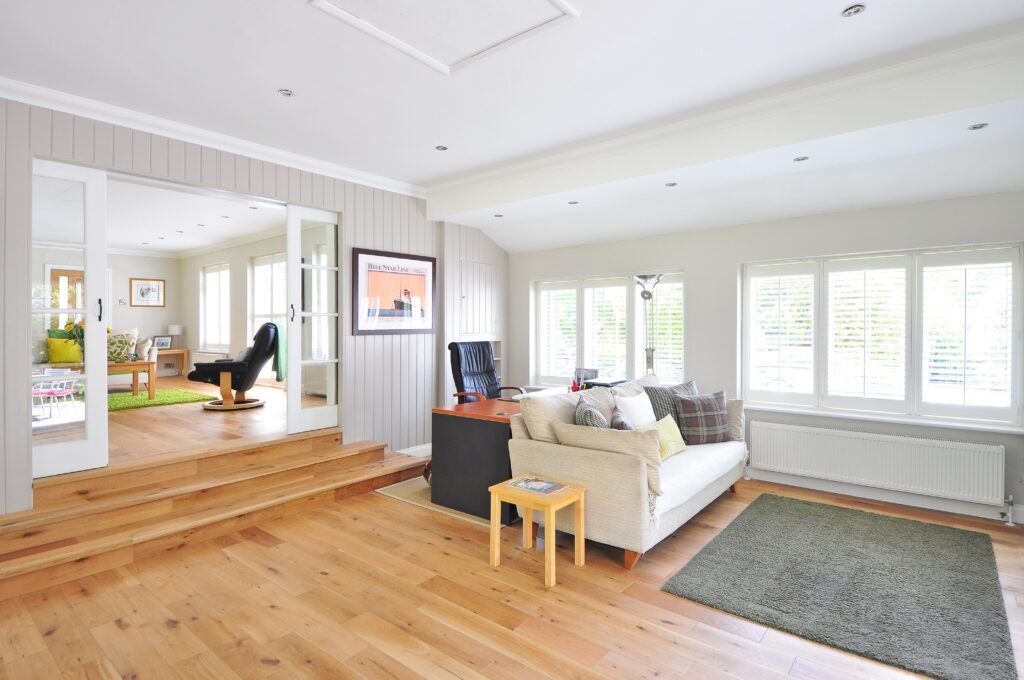
This is one of the most searched window covering questions in the UK, and the answer is backed by independent academic research rather than supplier marketing. If you want to reduce heat loss through your windows this winter and keep your Yorkshire home genuinely warmer without turning the thermostat up the evidence clearly points in one direction. This guide explains what the research actually shows, why the physics work in shutters’ favour, and what that means for homeowners deciding between plantation shutters and curtains.
What the Research Actually Shows
The most credible and frequently cited research on this question comes from Historic Scotland’s Technical Conservation Group. In a study commissioned by the Scottish Government and carried out by Dr Paul Baker and the Centre for Research on Indoor Climate and Health at Glasgow Caledonian University, a series of traditional window coverings were tested in an Environmental Chamber a controlled laboratory environment measuring real heat flux across a traditional single-glazed timber sash window under a temperature gradient of 20 degrees Celsius.
The results, published in Historic Scotland Technical Paper 1, are unambiguous. Timber shutters reduced heat loss through the window by 51%. Heavy curtains reduced heat loss by just 14%. A modern roller blind reduced heat loss by 22%. Secondary glazing was the only option to outperform shutters, achieving a 63% reduction but at a dramatically higher cost and level of disruption than any window covering.
The Edinburgh World Heritage Trust independently reinforced these findings through thermal imaging surveys of traditional Scottish properties, finding that closing wooden shutters was one of the most effective steps homeowners could take to reduce heat escaping through windows. The Trust’s work, funded by the Climate Challenge Fund, concluded that shutters could dramatically reduce energy bills in period properties the type of housing that predominates across Sheffield, Barnsley, Rotherham, and Doncaster.
For modern double-glazed windows, the performance differential between shutters and curtains narrows but shutters still lead. The British Blind and Shutter Association, drawing on independent research conducted at the University of Salford’s Energy House Laboratory, confirmed that well-fitted plantation shutters reduce heat loss through double-glazed windows by up to 28%. Independent tests on curtains against double glazing consistently produce figures of 14% or below the same range as the Historic Scotland single-glazed results, because the curtain’s thermal limitation is not the glass it is placed against but the mechanics of how a hanging fabric covering works.
Why Shutters Outperform Curtains: The Physics Explained
Understanding why shutters beat curtains for insulation requires understanding the two distinct ways that heat escapes through a window, and how each covering type addresses them.
Convective Heat Loss: The Problem Curtains Cannot Solve
The primary mechanism of heat loss through a window is convection. Warm room air rises, makes contact with the cold glass surface, loses heat, cools, and falls creating a continuous cycle of warm air flowing to the glass and cold air returning to the room. This convective loop is what makes sitting near a window feel cold even when the heating is on and there is no physical draught.
Curtains interrupt this cycle partially the fabric slows the flow of air across the glass surface. But because curtains hang from a rail above the window rather than being fixed to the window frame, they almost always leave gaps: at the top between the curtain rail and the ceiling, at the sides between the curtain edge and the wall or window frame, and at the bottom unless the curtain pools on the floor. These gaps are precisely where the convective loop continues unimpeded, allowing warm air to continue reaching the cold glass and escaping.
A well-fitted plantation shutter addresses this differently. Because the shutter frame is fixed directly to the window reveal and the panels sit within it, there are no significant side or top gaps for the convective current to bypass. The shutter panels, when closed, create a continuous physical barrier across the entire window opening rather than a loose fabric screen with open edges. This is the fundamental structural reason shutters outperform curtains not material density or thickness, but the geometry of how they fit the window.
The Still-Air Pocket: Where the Real Insulation Happens
The second and equally important mechanism is the still-air pocket formed between the shutter panel and the window glass when the shutters are closed. Still air is one of the most effective natural insulators available it is the same principle that makes double glazing work, with the trapped gas between the panes providing most of the thermal resistance.
A plantation shutter fitted within the window reveal with close tolerances creates a chamber of trapped air between the back of the shutter panel and the face of the glass. Because this air cannot circulate it is bounded by the shutter on one side and the glass on the other it remains thermally still and acts as an insulating barrier. Wood, which has a thermal conductivity approximately 1,000 times better than aluminium and significantly better than most synthetic materials, contributes further to the thermal resistance of the panel itself.
Curtains, even heavy interlined ones, do not reliably create this still-air effect. Because they hang loosely from a rail rather than being fixed to the reveal, air can circulate behind the fabric, particularly near the edges. The still-air layer that forms behind a curtain is disrupted every time someone moves in the room, every time the heating turns on, and every time a draught enters from elsewhere in the property. A fixed plantation shutter is immune to all of these disruptions.
The Curtain Performance Gap: Why 14% Is Lower Than Most People Expect
Many homeowners are surprised to learn that heavy curtains the thickest, most interlined, most expensive fabric option available reduce window heat loss by only 14% according to the Historic Scotland research. The intuitive assumption is that a thick, heavy curtain must provide substantial insulation. The research shows that the assumption is wrong, and the physics explains why.
The key insight is that curtain thermal performance is limited not by the thermal resistance of the fabric itself, but by the air circulation that occurs around and behind it. Even a fully interlined curtain with a thermal backing will allow some convective air movement at the edges, and it is this air movement not radiation through the fabric that is responsible for the majority of heat loss that curtains fail to prevent.
A well-sealed curtain one that is fitted with a pelmet above, weighted at the bottom to seal against the sill, and with side returns that seal against the wall performs better than a standard hanging curtain. English Heritage research, drawing on the same Glasgow Caledonian University testing programme as the Historic Scotland study, found that well-sealed curtains could achieve up to 40% heat loss reduction. The critical word is “well-sealed” achieving this requires a level of installation precision and ongoing maintenance that most domestic curtain installations do not meet. A poorly maintained pelmet seal, a curtain that no longer reaches the floor, or a fabric that has shrunk slightly over washing cycles restores most of the thermal gap immediately.
Plantation shutters, by contrast, do not depend on being “well-sealed” in the same ongoing way. The frame-to-reveal fit is established at installation and remains consistent thereafter, regardless of how the homeowner uses them day to day.
How Different Curtain Types Compare to Plantation Shutters
Not all curtains perform equally, and it is worth being precise about where the comparison sits depending on the specific curtain type being considered.
| Window Covering | Heat Loss Reduction | Key Limitation | Source |
| Timber plantation shutters | Up to 51% (single glazing) | Requires precise fit to window reveal | Historic Scotland Technical Paper 1 (Dr Paul Baker, Glasgow Caledonian University) |
| Plantation shutters on double glazing | Up to 28% | Performance dependent on fit | BBSA / University of Salford |
| Secondary glazing | Up to 63% | High cost and installation disruption | Historic Scotland Technical Paper 1 |
| Well-sealed heavy curtains with pelmet | Up to 40% | Requires ongoing maintenance to stay sealed | English Heritage research, Glasgow Caledonian University |
| Standard heavy curtains | 14% | Air gaps at sides, top, and bottom | Historic Scotland Technical Paper 1 |
| Modern roller blind | 22% | Side gaps prevent sealed air pocket | Historic Scotland Technical Paper 1 |
| Net curtains or sheers | Under 5% | Minimal thermal barrier | General consensus across thermal studies |
The table shows that at their optimised best well-sealed, pelmeted, fully interlined curtains can approach shutter performance. But that optimised configuration requires specialist installation, ongoing maintenance of the pelmet seal, and a permanent, heavy aesthetic that many Yorkshire homeowners find impractical in everyday living rooms, kitchens, or bedrooms. Plantation shutters achieve their thermal performance through geometry and fit that does not degrade over time in the same way.
Summer Performance: Where Shutters Also Win
The insulation comparison between shutters and curtains is not limited to winter heat retention. The same mechanisms that make shutters effective at reducing heat loss in winter also make them effective at blocking solar heat gain in summer and this is an area where the performance differential is even more pronounced.
Solar heat gain the warming effect of direct sunlight entering a room through a south or west-facing window is a significant comfort problem in Yorkshire homes during summer afternoons. A west-facing room in a Sheffield terrace can become uncomfortably hot from mid-afternoon onwards in July, even without exceptional temperatures outside.
Curtains address solar gain by absorbing or reflecting sunlight at the fabric surface. The problem is that a curtain drawn against direct sun heats up quickly as it absorbs radiation, and then re-radiates that heat into the room the classic greenhouse effect of a drawn curtain on a sunny day. The curtain prevents direct sunlight from entering but simultaneously becomes a secondary heat source.
A plantation shutter with louvres angled to deflect direct sunlight reflects radiation back toward the glass rather than absorbing it. The shutter surface remains cooler because it is not absorbing solar energy it is directing it back out. Louvres angled at approximately 45 degrees toward the ceiling allow diffused daylight to enter while deflecting direct solar radiation, keeping rooms significantly cooler in summer without requiring complete window blackout.
This two-season thermal performance reducing heat loss in winter and blocking solar gain in summer is something curtains simply cannot replicate. A drawn curtain blocks light and heat together. An angled plantation shutter manages them independently.
The Role of Fit: Why Even Good Curtains Are at a Structural Disadvantage
One of the most important and least-discussed aspects of this comparison is that the thermal performance gap between shutters and curtains is not primarily about material quality it is structural, and it cannot be eliminated by spending more on better curtains.
No curtain, regardless of how thick, how interlined, or how expensively fitted, can fully replicate the sealed air pocket that a well-fitted plantation shutter creates, because a curtain is inherently a hanging covering rather than a fixed one. The convective air movement that curtains cannot stop is a consequence of the geometry of how they are fitted from above, with open edges rather than any limitation in the fabric itself.
This is why upgrading from budget curtains to premium interlined curtains, while producing some thermal improvement, does not close the gap with plantation shutters. It is also why a modestly priced set of plantation shutters in a material like UPVC or basswood can outperform premium thermal curtains the insulating advantage is structural, not material-dependent.
For Yorkshire homeowners in period properties Victorian and Edwardian terraces across Sheffield, Crookes, Nether Edge, Walkley, and Hillsborough where the existing windows may be single-glazed or early double-glazed timber frames, this structural advantage is most significant. These are exactly the properties tested in the Historic Scotland research, and they are the homes that benefit most dramatically from a properly fitted plantation shutter over any curtain alternative.
Combining Shutters and Curtains: When Both Makes Sense
The Historic Scotland research found that combining window coverings shutters with blinds or curtains together produced some of the greatest heat loss reductions of any option tested. The combined effect is additive because each covering creates an additional trapped air layer and an additional barrier to convective loss.
For Yorkshire homeowners who want the maximum possible thermal performance from their windows, fitting plantation shutters and then using thermal curtains in front of them achieves a result that neither product can match alone. This combination is particularly effective in north-facing rooms, bedrooms in exposed locations, or properties with single glazing where every layer of additional thermal resistance counts.
In practice, this combination is also aesthetically practical: the shutters provide daytime privacy, light control, and the primary thermal barrier, while the curtains which no longer need to provide insulation when closed can be lighter, more decorative, and easier to maintain. The thermal function and the aesthetic function are decoupled.
Financial Case: What the Energy Saving Means for Yorkshire Heating Bills
Translating heat loss reduction percentages into actual savings requires some calculation, but the framework is straightforward. Windows account for approximately 18% of total home heat loss in a typical UK property. If plantation shutters reduce heat loss through those windows by 28% on double glazing, the net saving on total home heating energy is approximately 5% worth roughly £33 to £50 per year on a typical South Yorkshire gas bill based on Ofgem’s current price cap data.
For single-glazed properties where the Historic Scotland 51% figure applies the saving is proportionally larger. A single-glazed window loses more heat than a double-glazed one, and reducing that by 51% versus 14% produces a more meaningful financial difference. In Yorkshire’s significant stock of Victorian stone terraces where single glazing or early double glazing remains common, the thermal and financial case for plantation shutters over curtains is considerably stronger than the double-glazed figures alone suggest.
These savings compound year on year and build across the full lifespan of a plantation shutter installation 10 to 20 years while curtains require periodic replacement and their thermal performance can degrade as fabric wears, pelmets loosen, and edges gap.
Choosing the Right Plantation Shutters for Insulation in Yorkshire
If thermal performance is a primary consideration alongside aesthetics, a few specification choices maximise insulating effect.
Hardwood materials particularly Paulownia with ABS coating provide the best thermal performance of any shutter material, combining the natural insulating properties of solid wood with a dimensionally stable construction that maintains a consistent fit across seasonal temperature and humidity changes. Wood’s natural low thermal conductivity means the panel itself contributes to the thermal resistance of the window assembly, not just the air pocket behind it.
Full height shutters provide the most complete thermal barrier by covering the entire window opening with no uncovered section. Tier-on-tier allows the upper and lower sections to be managed independently useful in rooms where passive solar gain through the upper section during the day is a priority while still providing full coverage when both sections are closed overnight. Café style shutters, which cover only the lower half of the window, should not be considered a primary thermal solution since the upper half of the window remains unshuttered.
Louvre size has a modest effect on insulation. Larger 89mm louvres have fewer gaps between slats when closed, slightly reducing the potential for air movement through the panel. For rooms where thermal performance is the primary concern, 89mm louvres are a marginal improvement over 63mm.
The most important single factor, however, remains fit. A shutter measured and fitted with close tolerances to the window reveal will consistently outperform a shutter of more expensive material that fits loosely. This is why every Lafayette fitted order starts with a free home survey professional measurement is not a formality, it is the foundation of the thermal performance.
Lafayette Shutters: Thermal Window Coverings Across Yorkshire and Derbyshire
Lafayette Shutters supplies and installs thermally effective plantation shutters across Sheffield, Rotherham, Barnsley, Doncaster, Huddersfield, Chesterfield, and the wider Yorkshire and Derbyshire region. Materials include Paulownia hardwood with ABS coating for living rooms and bedrooms, UPVC for kitchens and bathrooms, and basswood for larger openings each available in a range of colours and finishes.
Every fitted order begins with a free home survey where a specialist measures your windows precisely and advises on the best material, style, and configuration for your specific thermal requirements. For homeowners outside the installation area, supply-only orders ship nationwide across Great Britain. The Lafayette FAQ covers material choices, lead times, and warranty terms in full. For personalised advice on which option suits your propert, contact the team directly.
Frequently Asked Questions About Plantation Shutters vs Curtains for Insulation
Do plantation shutters insulate better than curtains?
Yes, significantly and consistently across independent research. Historic Scotland’s Technical Paper 1, produced by Dr Paul Baker at Glasgow Caledonian University and commissioned by the Scottish Government, found that timber shutters reduce heat loss through single-glazed windows by 51% compared to just 14% for heavy curtains. On modern double-glazed windows, the British Blind and Shutter Association’s independent research confirms plantation shutters reduce heat loss by up to 28% still ahead of standard curtain performance on the same glazing.
Why do plantation shutters insulate better than curtains?
The thermal advantage of plantation shutters over curtains is structural rather than material. Shutters fitted within the window reveal create a sealed air pocket between the panel and the glass still air is one of the most effective natural insulators. Curtains leave gaps at the sides, top, and bottom that allow the convective air movement responsible for the majority of window heat loss to continue. No curtain, regardless of thickness, can replicate the sealed air pocket that a well-fitted plantation shutter creates.
Are thermal curtains a good alternative to plantation shutters for insulation?
Thermal curtains are better than standard curtains and represent a meaningful improvement for homeowners not ready to invest in plantation shutters. Well-sealed thermal curtains with pelmets and side returns can achieve up to 40% heat loss reduction according to English Heritage research approaching shutter performance in optimised conditions. The practical limitation is that achieving and maintaining this performance requires ongoing attention to sealing that most domestic curtain installations do not sustain over time.
Do plantation shutters help with insulation in summer as well as winter?
Yes. In summer, plantation shutters with louvres angled to deflect direct sunlight reflect solar radiation back toward the glass rather than absorbing it keeping rooms cooler than a drawn curtain, which absorbs solar energy and re-radiates it as heat into the room. This two-season performance reducing heat loss in winter and blocking solar gain in summer is one of shutters’ most significant practical advantages over curtains as an insulating window covering.
Which shutter material is best for insulation?
Dense hardwood materials particularly Paulownia with ABS coating provide the best overall thermal performance, combining wood’s naturally low thermal conductivity with a dimensionally stable construction that maintains a consistent reveal fit across seasons. The still-air pocket formed between the panel and the glass is the primary source of insulation regardless of material, which means fit quality ultimately matters more than material choice a well-fitted UPVC shutter will outperform a loosely fitted hardwood one every time.
How much money can plantation shutters save on energy bills in Yorkshire?
Based on windows accounting for 18% of total home heat loss and plantation shutters reducing that by 28% on double glazing, the net saving on annual heating energy is approximately 5% worth roughly £33 to £50 per year on a typical South Yorkshire gas bill. For properties with single glazing, where shutters reduce window heat loss by up to 51%, the saving is proportionally larger. These savings compound across the 10 to 20-year lifespan of a shutter installation, while curtains require periodic replacement as thermal performance degrades with age and wear.
Should I replace my curtains with plantation shutters for better insulation?
Plantation shutters provide significantly better thermal performance than standard curtains and comparable or better performance than premium thermal curtains in most real-world domestic installations. They also add privacy, light control, aesthetic value, and a long-term fixture that adds property value benefits curtains do not provide. For homeowners prioritising maximum insulation, combining plantation shutters with lighter decorative curtains gives the best overall result, since each product adds an additional thermal layer. The Lafayette team can advise on the best configuration for your specific rooms and windows.
Ready to Replace Heat-Losing Curtains With Plantation Shutters in Your Yorkshire Home?
Lafayette Shutters installs made-to-measure plantation shutters across Sheffield, Rotherham, Barnsley, Doncaster, Huddersfield, Chesterfield, and across Yorkshire and Derbyshire. Every fitted order starts with a free home survey to ensure the precision fit that makes the thermal performance real rather than theoretical.
Call 0114 698 6245, email info@lafayette-shutters.co.uk, or use the online quote tool for an instant price estimate.